Digital PR in 2026: how to choose placements when nofollow, dofollow, and AI citations all matter
· 13 min read

Former Product Lead, JPMorgan Asset Management, AIA & AXA
Digital PR earns the third-party mentions AI and Google trust — but not every placement is worth the pitch. Learn how to choose outlets, when nofollow beats dofollow, and when to skip PR entirely.
On this page
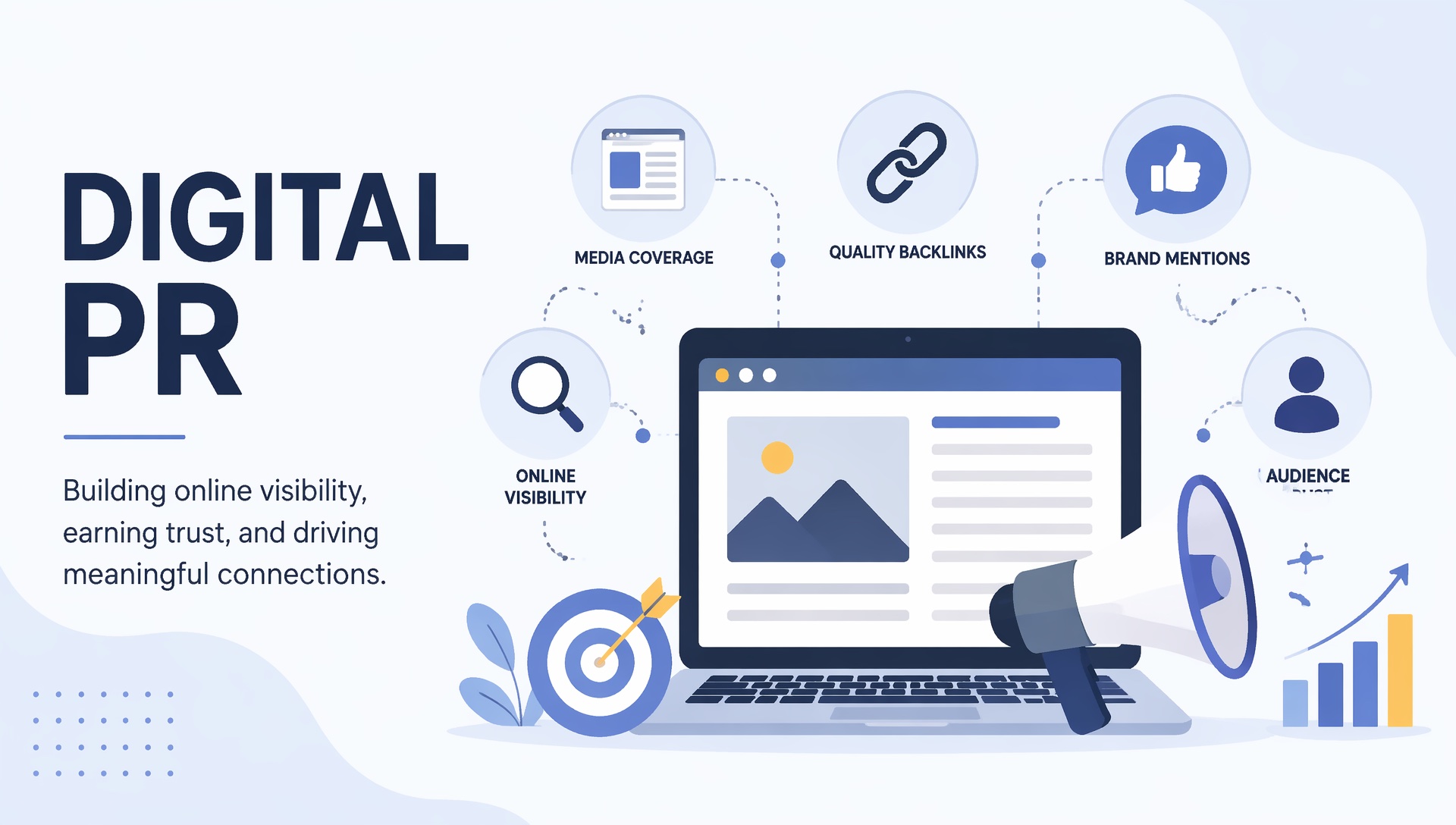
How do you choose good digital PR placements? Prioritise outlets your buyers read, stories worth citing (original data, expert commentary, category benchmarks), and pages that can enter AI retrieval — then note whether the link is follow or nofollow as a secondary SEO signal, not the primary success metric.
When does digital PR help? It helps when you need third-party validation AI models can corroborate across sources, when your category prompts surface competitor listicles you are absent from, when entity disambiguation is weak, or when mention rate lags Google rank on the same intents (dual-lens gap).
Should you do it? Do it if you can commit to monthly measurement — prompt-level citation rate, not just “links acquired.” Skip it if your only KPI is referring domains from unrelated blogs, or if on-site AEO fundamentals (extractable answers, schema, freshness) are not in place yet — PR amplifies a clear story; it cannot fix a site AI cannot parse.
The sections below cover research, a placement decision matrix, nofollow vs dofollow by platform, what to avoid, and how Asian teams should allocate budget.
Why digital PR changed — and what most guides miss
2026 coverage of “digital PR for AI search” converges on one headline: earned media drives AI citations. Muck Rack reported 89–94% of AI-cited links from non-paid sources, with earned media at 82–89% depending on the study wave. Journalism alone accounts for roughly 20–30% of citations.
That is table stakes. What most articles skip in 2026:
- Branded mentions beat raw backlinks for AI visibility — Ahrefs (75k brands): branded web mentions 0.66–0.71 correlation vs DR ~0.27 and page count ~0.19.
- Nofollow is not “SEO worthless” for GEO — the Semrush × Kevin Indig 2025 analysis found nofollow links correlate nearly as strongly as follow links with AI visibility; ChatGPT and Gemini lean slightly toward nofollow sources (Reddit, Quora, Wikipedia).
- Platform divergence — Google AI Overviews correlate strongly with web mention density (ρ ≈ 0.65 on top domains); ChatGPT and Perplexity show weaker mention-to-visibility correlation on smaller samples — your PR mix should differ by target engine.
- Recency window — Muck Rack notes highest citation rates within seven days of publication; sustained cadence beats one annual report.
The strategic shift: digital PR is not link building with a press release template. It is entity and citation engineering — earning the independent sentences AI models repeat when they answer category questions.
Nofollow vs dofollow — what each actually means in 2026
Dofollow is shorthand for a normal editorial link without rel="nofollow", rel="sponsored", or rel="ugc". It may pass ranking signals. There is no rel="dofollow" attribute.
Nofollow marks a link as non-endorsed. Since Google’s September 2019 update, Google treats nofollow as a hint, not a command — but publishers still use it on comments, paid placements, wire syndication, and many news sites.
Sponsored and UGC links (rel="sponsored", rel="ugc") further qualify paid or user-generated placements — important when evaluating “digital PR” that is actually advertorial.
| Link type | Typical source | SEO equity | GEO / AI value |
|---|---|---|---|
| Editorial dofollow | Industry publication, partner blog | High for target URL rank | High if page is retrieved for category prompts |
| Editorial nofollow | Major news sites, many APAC outlets | Lower direct PageRank pass | Still high — page enters retrieval; brand name corroborates entity |
| Sponsored / paid | Advertorial, paid guest posts | Risk if undisclosed | Low — paid sources barely register in Muck Rack’s citation mix |
| Wire syndication | PR Newswire republish chains | Minimal | Rising for press releases specifically, but not a substitute for earned editorial |
Critical distinction for GEO: AI answer engines do not read rel attributes when deciding whether to name your brand or cite a URL. A nofollow mention in Nikkei or the Straits Times can move citation rate more than a dofollow link from an unrelated US directory. Measure mentions and citations, not follow status alone.
The two-scorecard framework — how to choose a placement
Most teams filter opportunities with one question: “Is it dofollow?” That misallocates budget in 2026.
Score every pitch on two independent outcomes:
Scorecard A — SEO link equity
Ask:
- Is the outlet topically relevant to our category?
- Will the link point to a URL we want to rank (comparison page, category hub, data report)?
- Is the link editorial (not sponsored or sitewide footer)?
- Is the anchor text natural and on-brand?
Prioritise dofollow here when the goal is organic rank for a specific page — especially for Google AI Overviews and Perplexity, which some studies show favour follow links slightly more than ChatGPT/Gemini.
Scorecard B — GEO entity and citation
Ask:
- Do buyers in our market read this outlet?
- Will the piece name our brand in context (not just a link in a contributor bio)?
- Does the publication already appear in AI citation sets for our category prompts?
- Will the story stay indexable and crawlable (not paywalled from bots)?
- Does it add corroborating facts AI can repeat (pricing, geography, use case, third-party validation)?
Accept nofollow freely when Scorecard B is high — especially in Japan, Korea, and Singapore, where authoritative media often nofollow external links by policy while carrying enormous local trust.
Decision matrix
| Scorecard A (SEO) | Scorecard B (GEO) | Verdict |
|---|---|---|
| High | High | Priority pitch — ideal placement |
| Low | High | Accept nofollow — entity + citation win |
| High | Low | Deprioritise — link equity without AI/buyer relevance |
| Low | Low | Skip — vanity metric |
This framework is the angle most 2026 listicles omit: follow type is a tiebreaker, not the decision.
Which models care about what — platform-specific PR targets
Digital PR is not one funnel into all AI engines. Correlation and citation behaviour diverge.
| AI surface | What PR signals seem to matter most | Follow-type bias (2025–2026 research) |
|---|---|---|
| Google AI Overviews / AI Mode | Branded web mentions (ρ 0.664), branded anchors, pages in top-10 organic | Follow links somewhat favoured vs ChatGPT/Gemini in some studies |
| ChatGPT | YouTube mentions (~0.737 correlation), broad web mention density, Wikipedia | Nofollow from Reddit, Quora, Wikipedia still strong |
| Perplexity | Recency, FAQ-style sources, Reddit-heavy citation mix | Follow links slightly favoured |
| Gemini | Grounded retrieval from Google index; entity consistency | Nofollow tolerance similar to ChatGPT in Semrush/Indig analysis |
Practical allocation:
- Chasing Google AI visibility in Singapore or Japan? — Prioritise local editorial (even nofollow) + pages that rank organically; 75% of AI Overview links trace to top-10 results in multiple industry analyses.
- Chasing ChatGPT category mentions? — Add YouTube, podcast, and forum-adjacent PR (expert clips, creator collaborations) — not only traditional press.
- Chasing Perplexity? — Target comparison listicles and fresh review content with follow links where possible; monitor query fan-out sub-queries that surface review-type fan-outs.
Track each surface separately in AI visibility — a placement that moves Perplexity may not move Gemini.
What good digital PR looks like in 2026
1. Original data and benchmarks
AI models and journalists both cite primary research. Quarterly category benchmarks (“AI visibility in Southeast Asia,” “SME fintech adoption Singapore”) create citation anchors competitors cannot replicate. Fractl’s synthesis of 2026 citation research notes LLMs favour sources demonstrating topical authority across a subject — one data report referenced by five outlets beats five thin guest posts.
2. Expert commentary on news cycles
HARO-style reactive PR still works when the quote adds specific, verifiable facts — not generic thought leadership. Tie commentary to local regulatory or market context in APAC pitches.
3. Inclusion in buyer-trusted listicles
“Best [category] for [use case]” pages are retrieval fuel for query fan-out and direct citations. Prioritise listicles that already appear in your citation intelligence dashboard for category prompts — that is your trust hub hit list.
4. Entity hygiene alongside every placement
Every PR win should reinforce consistent legal name, product category, geography, and sameAs profiles — see brand entity and E-E-A-T. Inconsistent naming across English, Japanese, and romanised forms fragments entity resolution in CJK markets.
5. Structured on-site targets
Pitch links to answer-first pages — pricing FAQ, comparison hub, methodology page — not the homepage alone. Structured data and extractable answer blocks increase the chance a cited URL survives the next model refresh.
When digital PR does not help — skip these
Wire syndication without editorial gate. Republished press releases may show rising citation share for press releases specifically (Muck Rack, Dec 2025), but they do not replace earned coverage in buyer-trusted publications.
Paid guest posts on unrelated blogs. Low factual density, sponsored signals, and no buyer readership — weak on both scorecards.
DA-only targeting. Domain authority correlates weakly with AI visibility vs mentions. Ahrefs notes high-DR sites can be rarely cited if content lacks extractable facts.
One campaign per year. Citation recency peaks in days, not quarters. An annual report without follow-up stories dissipates.
PR before on-site fixes. If your site has indexability issues, contradictory facts, or no category content, PR sends traffic and citations to a broken foundation. Fix AEO fundamentals first.
US-only placements for APAC buyers. A dofollow link from a US marketing blog does not substitute for local-language editorial corroboration — see multilingual GEO and local collection methodology.
How Asian teams should choose differently
Three market realities change the nofollow/dofollow calculus:
1. Local authority media often nofollow. Nikkei, Korean tech press, Singapore business media, and regional trade publications frequently apply nofollow to outbound links. Teams that discard these as “failed SEO” lose the highest-trust entity signals in their market.
2. Language-native stories fan out differently. A Japanese comparison article triggers different query fan-out sub-queries than an English US listicle. PR pitches should use local data and local outlets — not translated US press releases.
3. Platform mix varies by country. Google remains dominant in Singapore; ChatGPT and Perplexity shares differ elsewhere. Weight Scorecard A vs B by which engine your buyers use, not global SEO Twitter consensus.
Budget rule of thumb for APAC GEO programmes:
- 40% — Local editorial and trade press (nofollow acceptable)
- 30% — Original local data / benchmark reports pitched to regional and global outlets
- 20% — Listicle and comparison inclusion targets surfaced from citation gap analysis
- 10% — Creator/video/podcast formats for ChatGPT-weighted mention signals
How to measure digital PR — beyond link reports
Replace “links acquired” with a monthly PR scorecard:
| Metric | What it tells you | Tool |
|---|---|---|
| Branded web mentions (new placements) | Entity corroboration density | Media monitoring + manual log |
| AI mention rate on category prompts | Did PR move consideration-set presence? | AI visibility |
| Citation rate | Did third-party pages start feeding answers? | Citation intelligence |
| Target URL organic rank | Did dofollow placements lift retrieval eligibility? | Google rank tracking |
| Fan-out gap closure | Did new sub-queries start citing you? | Query fan-out |
| Branded search volume | Third-strongest AI Overview correlate (0.392) in Ahrefs | Search Console |
Run category prompts from local IPs in each market — a US mention does not predict Singapore AI answers. Quratic measures PR impact the same way we measure GEO: scheduled prompt collection, citation mapping, and rank on matching intents in SG, JP, KR, MY, ID, and HK.
FAQ
Should I reject nofollow digital PR placements?
No — if Scorecard B (GEO) is high. Nofollow links from trusted editorial sources still enter AI retrieval and build brand entity corroboration. Reject placements that fail both scorecards, not those that fail follow-type alone.
Do dofollow links still matter for digital PR?
Yes — for specific URL ranking goals, especially when targeting Google organic and AI Overviews on pages you need in the top 10. Dofollow editorial links from relevant publications remain foundational SEO. They are one signal, not the whole programme.
Does digital PR replace on-site GEO work?
No. PR earns off-site validation; AEO and on-site structure determine whether AI cites your domain after mentioning you. The highest-leverage programmes run both — see our GEO playbook.
How long until digital PR affects AI answers?
Muck Rack documents peak citation impact within seven days of publication for fresh news — but compound visibility requires sustained placements over months. Measure at 4–8 week intervals minimum to absorb AI non-determinism (visibility score guidance).
What is the difference between digital PR and link building?
Digital PR pursues stories worth citing — data, expert commentary, news value. Link building often chases domain metrics. In 2026, story-led PR outperforms link-led outreach for AI visibility per Ahrefs mention correlations.
When should a brand not invest in digital PR?
When category AI mention rate is already strong but citation rate is weak — fix on-site content first. When you cannot measure prompt-level outcomes. When your pipeline is paid placements disguised as PR. When you lack local market stories for APAC buyers.
Bottom line: Good digital PR in 2026 is chosen by buyer relevance, citation potential, and entity corroboration — not dofollow checkboxes. Nofollow editorial in the right outlet beats dofollow noise from the wrong one. The teams winning in AI search measure mentions and citations on their category prompts, in their markets, on a continuous cadence.
Track PR impact on AI citations — citation intelligence, mention rate, and Google rank on the same intents. Definitions: digital PR, nofollow, dofollow, backlinks.