Indexability
Updated June 22, 2026 · Reviewed by the Quratic editorial team
Definition
Indexability is whether search engines can crawl a URL and include it in their index — the prerequisite for ranking, snippet capture, and retrieval by AI systems that draw on indexed web corpora. Non-indexable pages cannot contribute to SEO or most answer-engine visibility.
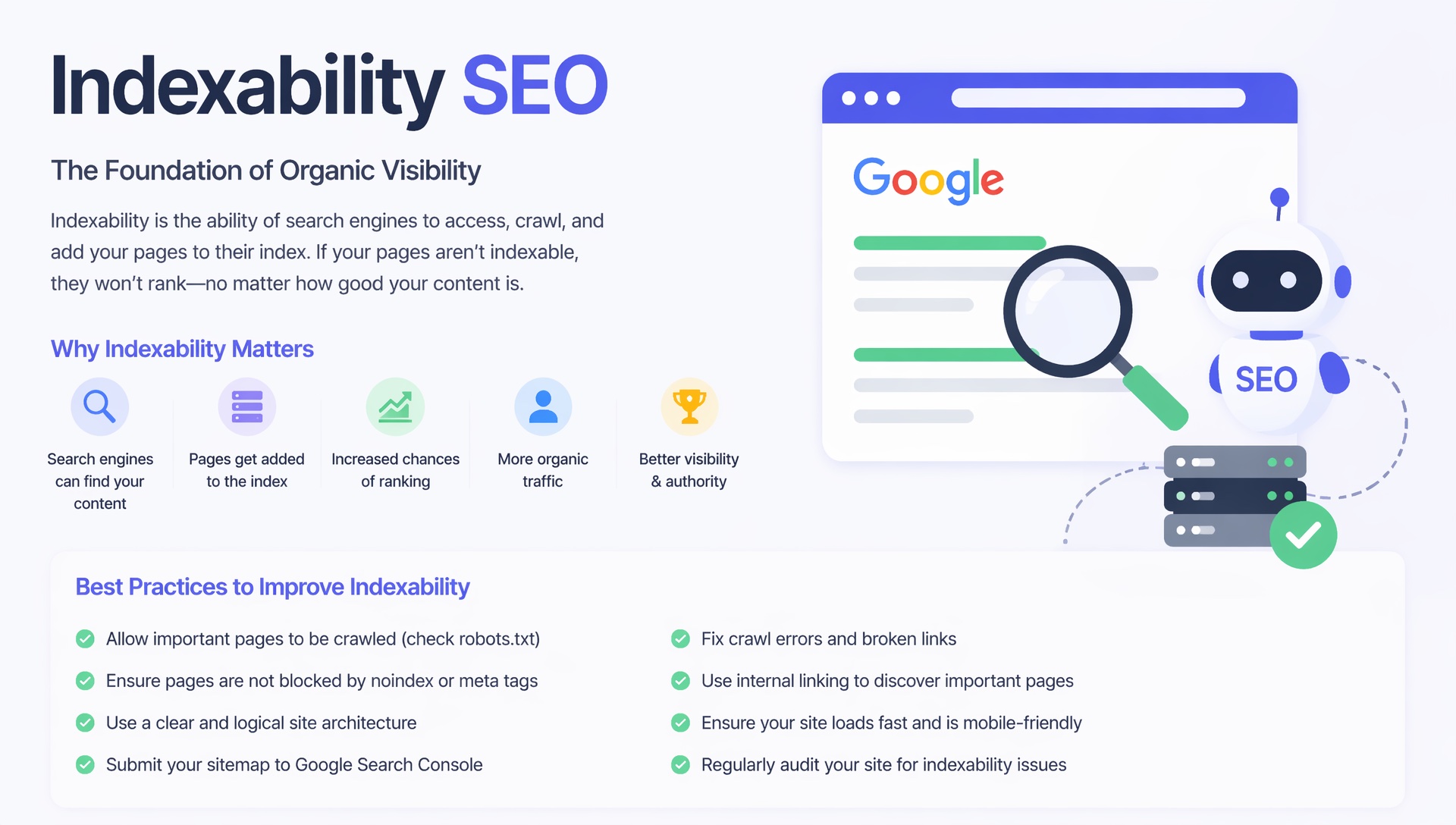
You cannot be cited if you are not indexed
Indexability requires: crawlable URLs (not blocked by robots.txt), no noindex directive, valid HTTP status, and content Google chooses to keep in the index. JavaScript-rendered content, login walls, and accidental staging blocks are common failure modes — pages exist for users but not for retrieval.
AI engines that browse the live web face similar constraints: if your FAQ is noindex, it will not shape AI Overviews or most RAG pipelines tied to search indexes.
How indexability differs from ranking
Indexing is inclusion; ranking is position. A page can be indexed but rank poorly — still retrievable for long-tail AI prompts. A non-indexed page is invisible to index-backed systems entirely (ChatGPT browsing may still fetch direct URLs if linked, but search-grounded paths dominate for commercial queries).
In Asian markets
Locale subfolders sometimes inherit accidental noindex from staging templates. Hreflang alternates pointing to noindexed pages break clusters. Include indexability checks in every international SEO launch — especially for localized answer blocks.
Example
A brand’s /pricing page carries noindex from an old A/B test. Rankings flatline; AI answers cite competitor pricing pages instead. Removing noindex restores indexation within days; citations follow after recrawl.