Brand entity
Updated June 20, 2026 · Reviewed by the Quratic editorial team
Definition
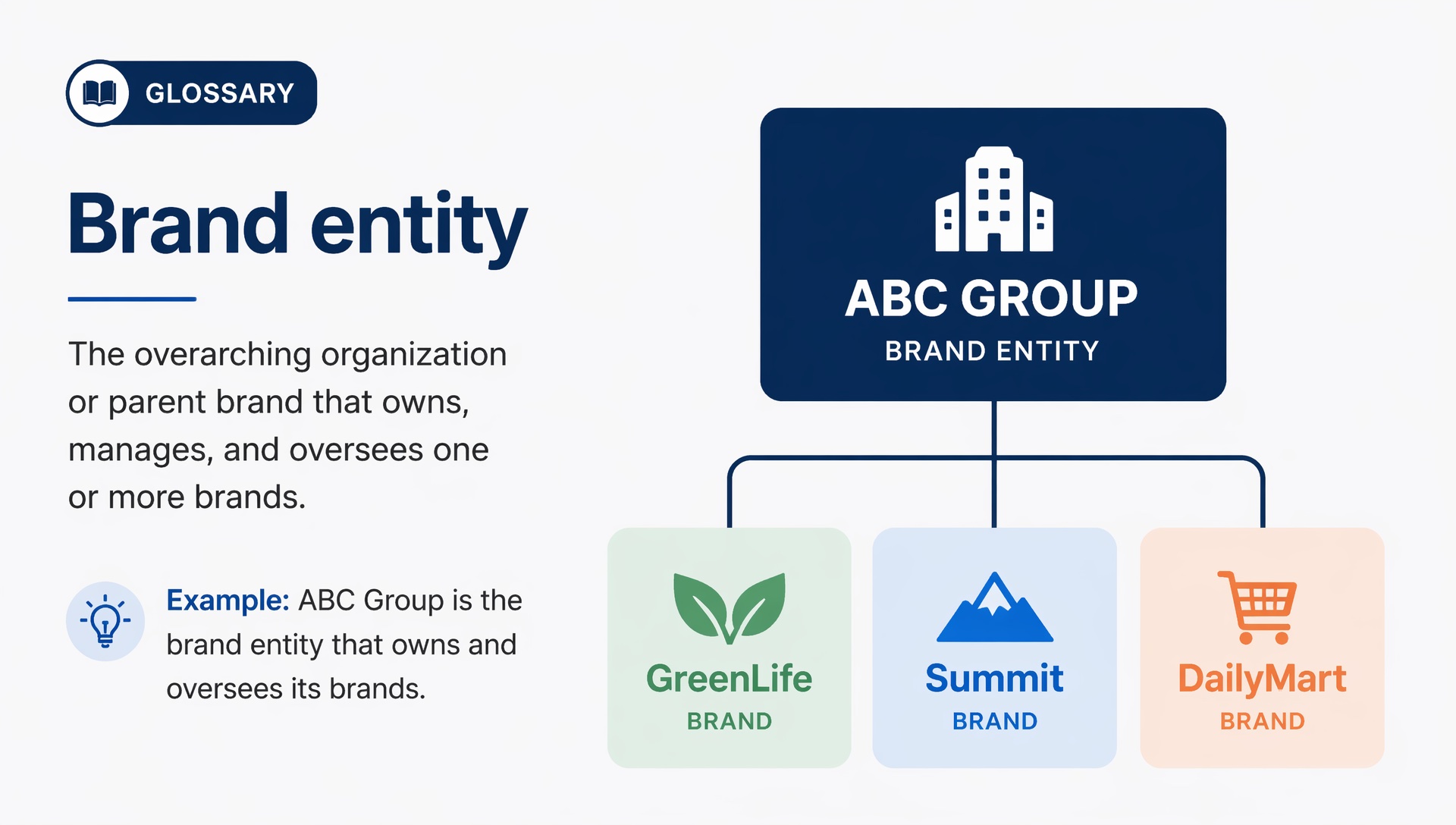
A brand entity is a machine-resolvable representation of a company or product — name, type, identifiers, and sameAs links — that search engines and LLMs use to recognize, disambiguate, and attribute mentions across the web. Consistent entity markup reduces confusion between brands with similar names and strengthens citation attribution.
Why entities precede citations
Models do not cite strings — they cite recognized things. When your brand exists as a coherent entity in Google’s knowledge graph, in Organization schema on your site, and in consistent sameAs links (LinkedIn, Crunchbase, Wikipedia where eligible), the system can map “Quratic” across contexts to one subject. Without that, mentions fragment: the model may describe your product accurately while attributing it to a homonym, a reseller, or no one at all.
How brand entities differ from logos and brand guidelines
Visual identity is for humans. A brand entity is for machines: JSON-LD on your homepage, Product schema on SKU pages, consistent legal name versus trade name, and stable URLs for About and Contact. Entity disambiguation work — especially for common words used as brand names — is part of entity hygiene, not a separate SEO task.
In Asian markets
Script multiplicity breaks naive entity matching. The same brand may appear in Latin characters, kanji, kana, or Hangul across different sources. Without explicit linking — alternate names in schema, localized About pages, Wikidata aliases — models answering in Japanese may treat your Latin-only entity as a different company from the katakana version buyers use in prompts. CJK entity disambiguation is not optional for brands selling across East Asia.
Example
A SaaS company adds Organization schema with sameAs to LinkedIn and its Crunchbase profile, registers a Wikidata item, and ensures every marketplace listing uses the identical legal name. Over subsequent measurement cycles, AI answers begin naming the brand consistently and attaching the correct product category.