Entity disambiguation
Updated June 20, 2026 · Reviewed by the Quratic editorial team
Definition
Entity disambiguation is the process of distinguishing one named entity — a company, product, or person — from others with similar names so search and AI systems attach facts, citations, and mentions to the correct subject. It combines structured identifiers, context, and authoritative sameAs links.
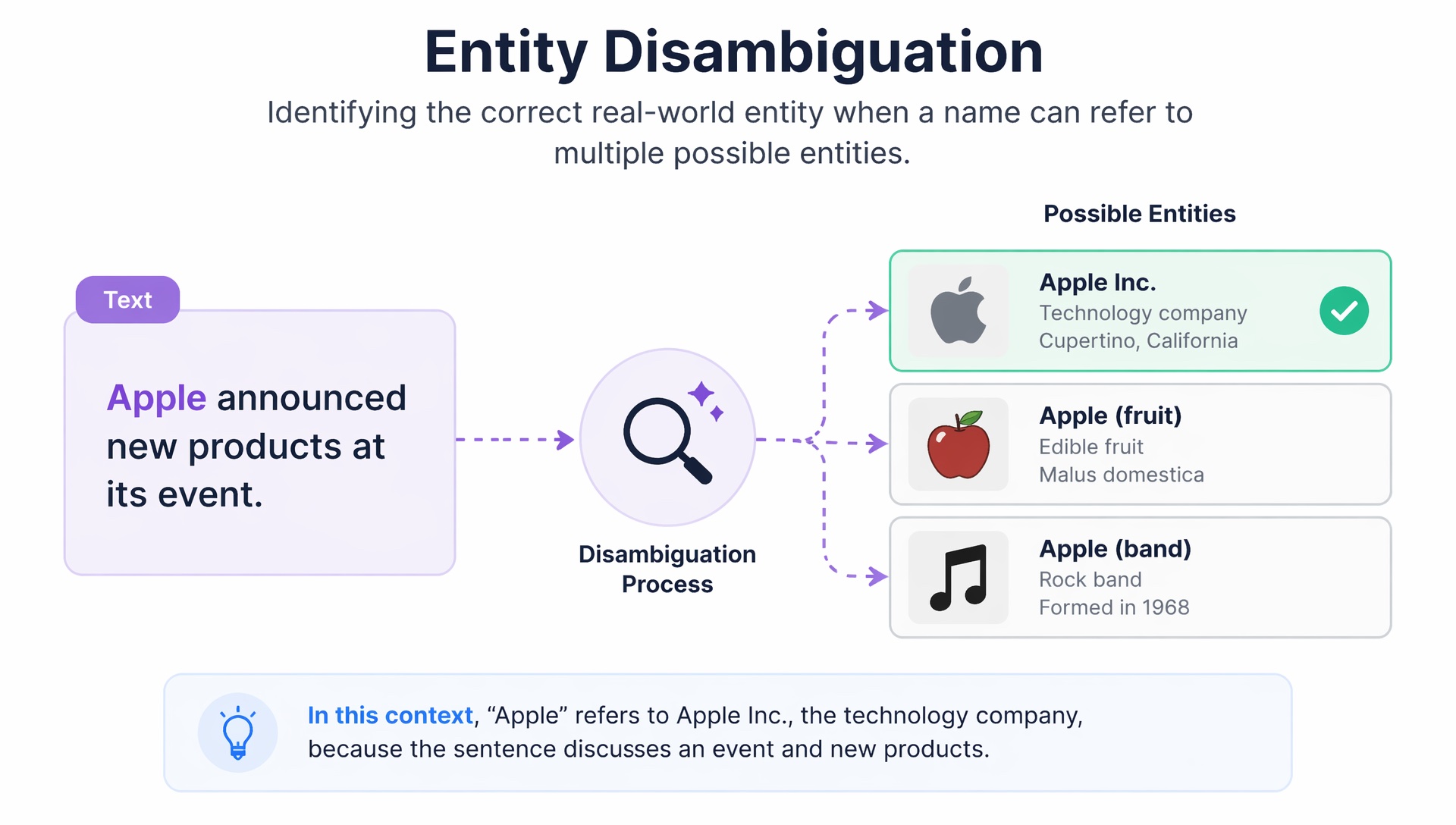
When names collide
Common-word brands (“Wave,” “Bridge,” “Atlas”) share names with generic concepts and other companies. Without disambiguation, models merge facts across subjects — citing your competitor’s pricing for your product, or describing the wrong industry entirely. Disambiguation work makes the machine’s subject unambiguous.
Practical disambiguation toolkit
**Organization/Productschema** with legal name,sameAs, andidentifier- Consistent co-occurrence: category + geography + founding year in About copy
- Wikidata/Wikipedia entries where notability criteria are met
- Disambiguation pages on your site for homonym searches
- For Asia: CJK entity disambiguation across scripts
In Asian markets
Transliteration multiplies ambiguity. A Latin brand name may map to several katakana spellings; a Chinese brand may appear in simplified, traditional, or English forms. Models trained on mixed corpora may attach the wrong Wikidata QID. Explicit alternate names in schema and localized About pages reduce cross-script collisions.
Example
Two fintech startups share a similar acronym. One publishes Organization schema with sameAs to Crunchbase and uses “payments API Singapore” consistently; AI answers begin attributing funding and product facts correctly while the homonym stops inheriting its metrics.