Structured data (schema.org)
Updated June 20, 2026 · Reviewed by the Quratic editorial team
Definition
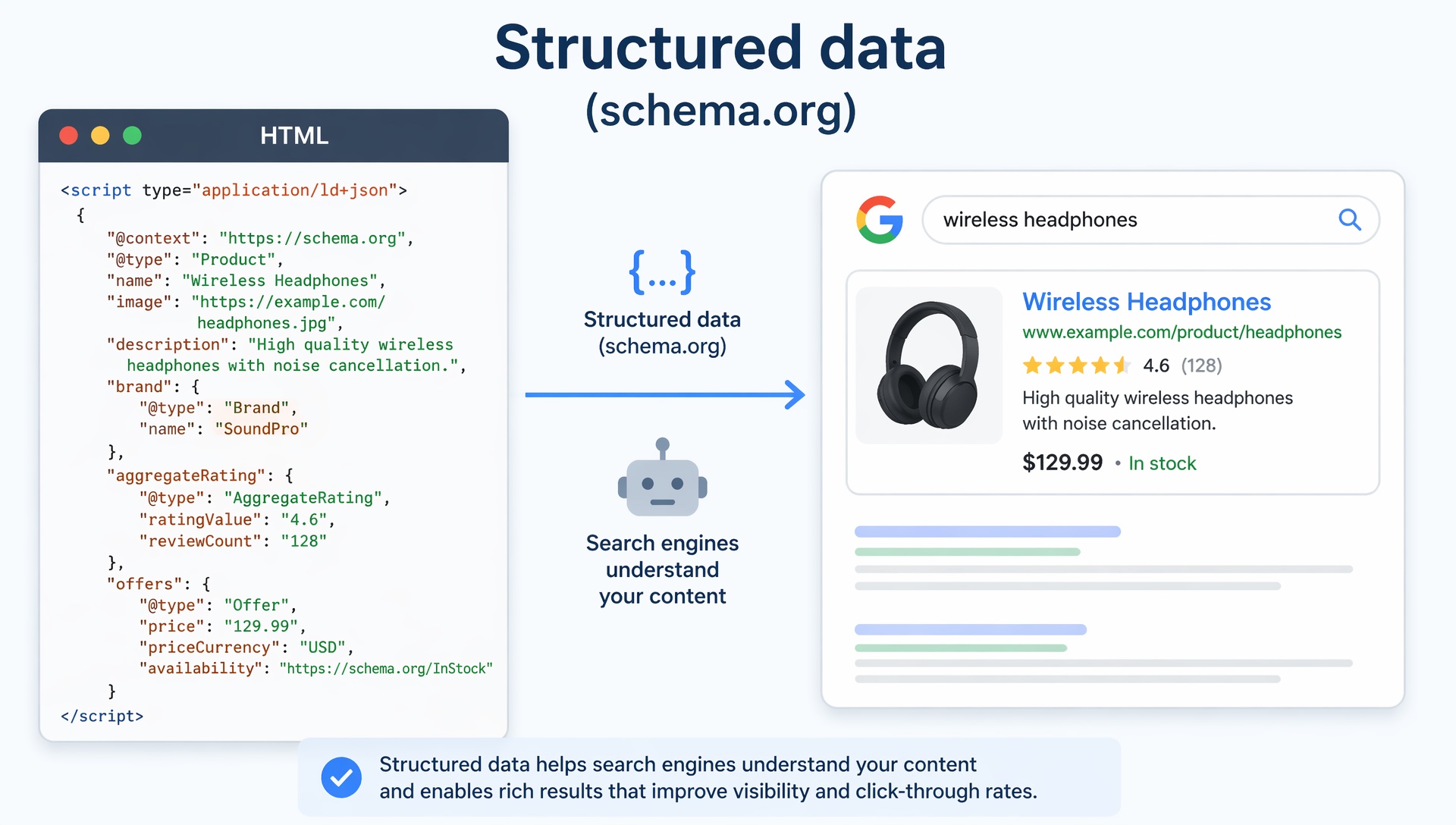
Structured data is machine-readable markup — typically JSON-LD using schema.org vocabulary — embedded in HTML so search engines and AI systems can parse entities, relationships, and facts without inferring them from layout alone. FAQPage, Organization, Product, and HowTo are high-leverage types for AI extractability.
Markup as an API for machines
Humans read headings and design; models read DOM trees — poorly when content lives in widgets and tabs. Structured data exposes typed facts: who you are, what the product costs, which questions you answer. It feeds knowledge graphs, enables rich results, and improves chunk quality for RAG. It is not a cheat code; invalid or spammy markup is ignored or penalized.
High-value types for GEO/AEO
**Organization/Product** — entity identity and offers**FAQPage**— paired with visible FAQ HTML matching the schema**HowTo**— procedural content for step queries**Article**withauthor,dateModified— freshness and E-E-A-T
Schema must mirror visible content; hidden JSON-LD alone violates Google guidelines.
In Asian markets
inLanguage and localized url properties help systems associate the correct language variant with an entity. Duplicate English schema on translated pages without language tags can cause wrong-market facts to surface in localized answers.
Example
A vendor adds FAQPage schema aligned with on-page FAQs including pricing updated monthly. AI Overviews begin citing the FAQ for cost queries while a competitor’s unschematized accordion is skipped.