Platform capabilities / AI citation intelligence
AI citation intelligence
Quick answer
Discover which domains AI platforms cite in answers — and spot gaps where your content should appear.
The problem
AI assistants do not invent answers — they cite specific websites and synthesise what they find. If a review site, a local publisher, or a competitor’s comparison page is feeding the model and your content is not, you lose the recommendation no matter how well you rank on Google. Most teams have no way to see which sources are shaping AI answers in their category, let alone in each Asian market.
How Quratic helps
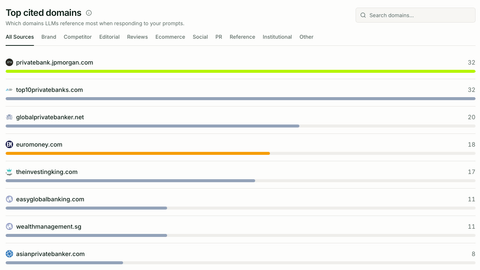
Quratic maps every domain cited in AI responses across your tracked prompts, models, and markets. You see which publishers, review sites, communities, and competitors the models trust, how often each source appears, and whether your own domain is among them — turning citation patterns into a clear list of content to create and outlets to pitch.
What you get
-
Know who influences the answer
A ranked list of the domains AI cites most for your prompts — the sources you need on your side to get recommended.
-
See where your content is missing
Instantly tell whether your own domain is being cited, and on which prompts and markets it is absent.
-
Turn sources into a PR target list
Convert recurring third-party citations into concrete outreach: the review sites, publishers, and communities worth earning placements on.
How it works
- 1
Capture every cited URL
During collection, Quratic records each link an AI answer references and resolves it to a domain.
- 2
Classify and aggregate
Sources are grouped by domain and flagged as your own or third-party, then counted across models, markets, and prompts.
- 3
Act on the gaps
Citation gaps feed directly into Opportunities, so the insight becomes a prioritised action, not just a chart.
Why it matters in Asia-Pacific
Citation sources are intensely local. AI answers in Japan lean on ITmedia and Nikkei xTECH; Korea pulls from Naver and local tech press; Indonesia cites Detik and homegrown marketplaces. A globally collected tool surfaces Western sources that never appear for local buyers. Quratic collects from residential IPs in each market, so the cited domains you see are the ones actually influencing decisions in that country.
Related terms
Related capabilities
Frequently asked questions
- What is an AI citation?
- An AI citation is a URL or domain that an AI platform references or links to when composing an answer. Quratic tracks citations by model, market, and prompt over time.
- How do citations differ from backlinks?
- Backlinks are links from other websites to yours, tracked by SEO tools. AI citations are domains that AI assistants use as sources when generating answers — a different influence channel that SEO tools do not measure.
- Can I see whether my own domain is cited?
- Yes. Quratic flags your brand’s domain in the citation list so you can immediately see how often AI uses your own content as a source, and on which prompts and markets it does not.
- How do citations connect to action?
- Citation gaps feed the Opportunities engine, which turns them into prioritised recommendations — pages to create, sources to pitch, and angles to pursue.
Ready to close the loop on AI search?
Other tools tell you you’re losing AI search. Quratic helps you win it — track, diagnose, brief, and draft content your team reviews and approves before it publishes.
30-day free trial · No credit card · You approve every draft