Query fan-out
Updated June 20, 2026 · Reviewed by the Quratic editorial team
Definition
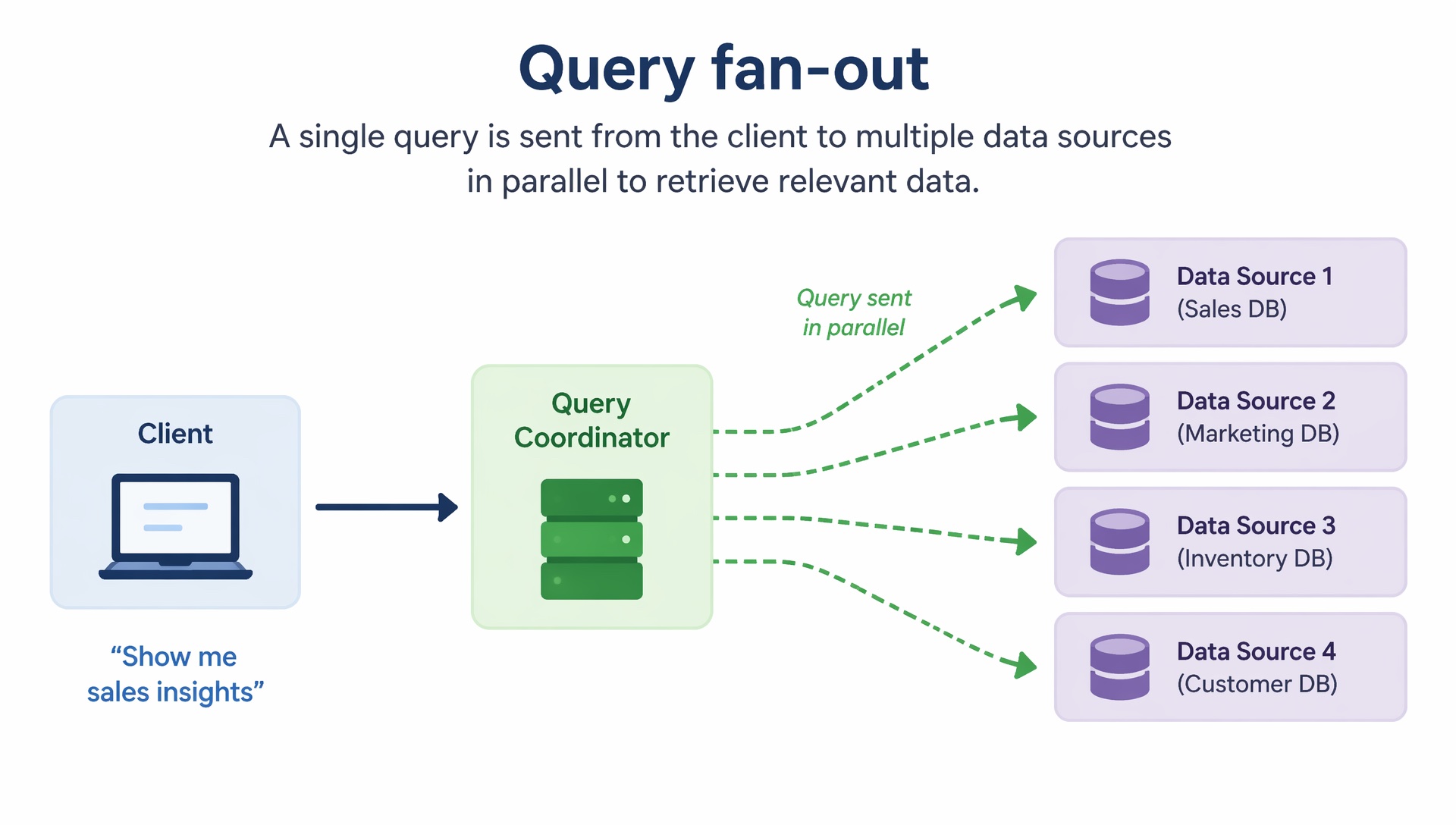
Query fan-out is when a search or AI system decomposes one user prompt into multiple sub-queries, retrieves results for each, and merges them into a single answer. Fan-out increases which sources can enter the evidence set — and makes prompt phrasing less predictable than classic one-query SEO.
One prompt, many searches
A buyer asks: “Best CRM for agencies in Singapore with Salesforce integration.” Internally, the engine may fan out to sub-queries — “CRM agencies Singapore,” “Salesforce integration CRM,” “CRM pricing Singapore” — each with its own retrieval set. Brands visible on only one sub-intent may disappear from the merged answer. Prompt surfacing should include multi-intent variants, not only head terms.
How fan-out differs from keyword clustering
SEO keyword clustering groups terms for content planning. Query fan-out happens at answer time, dynamically, and varies by engine. You cannot see fan-out directly; you infer it when paraphrases produce different citations for the same intent. Tracking prompt libraries beats assuming one keyword equals one retrieval path.
In Asian markets
Fan-out may add locale sub-queries (“Singapore,” “SG,” local language country names) automatically when the user’s IP or language hints localization. Content that omits explicit locale signals can lose fan-out slots to competitors with market-specific landing pages.
Example
Google AI Mode answers a compound product question by citing a pricing page from sub-query A and a review site from sub-query B. A brand strong on only one dimension is named with half the story — or omitted when a competitor covers both.