Topical authority
Updated June 22, 2026 · Reviewed by the Quratic editorial team
Definition
Topical authority is the perceived depth and breadth of a site's expertise on a subject — built through comprehensive content clusters, consistent entities, and corroborating mentions — so search engines and AI systems treat it as a go-to source for that topic.
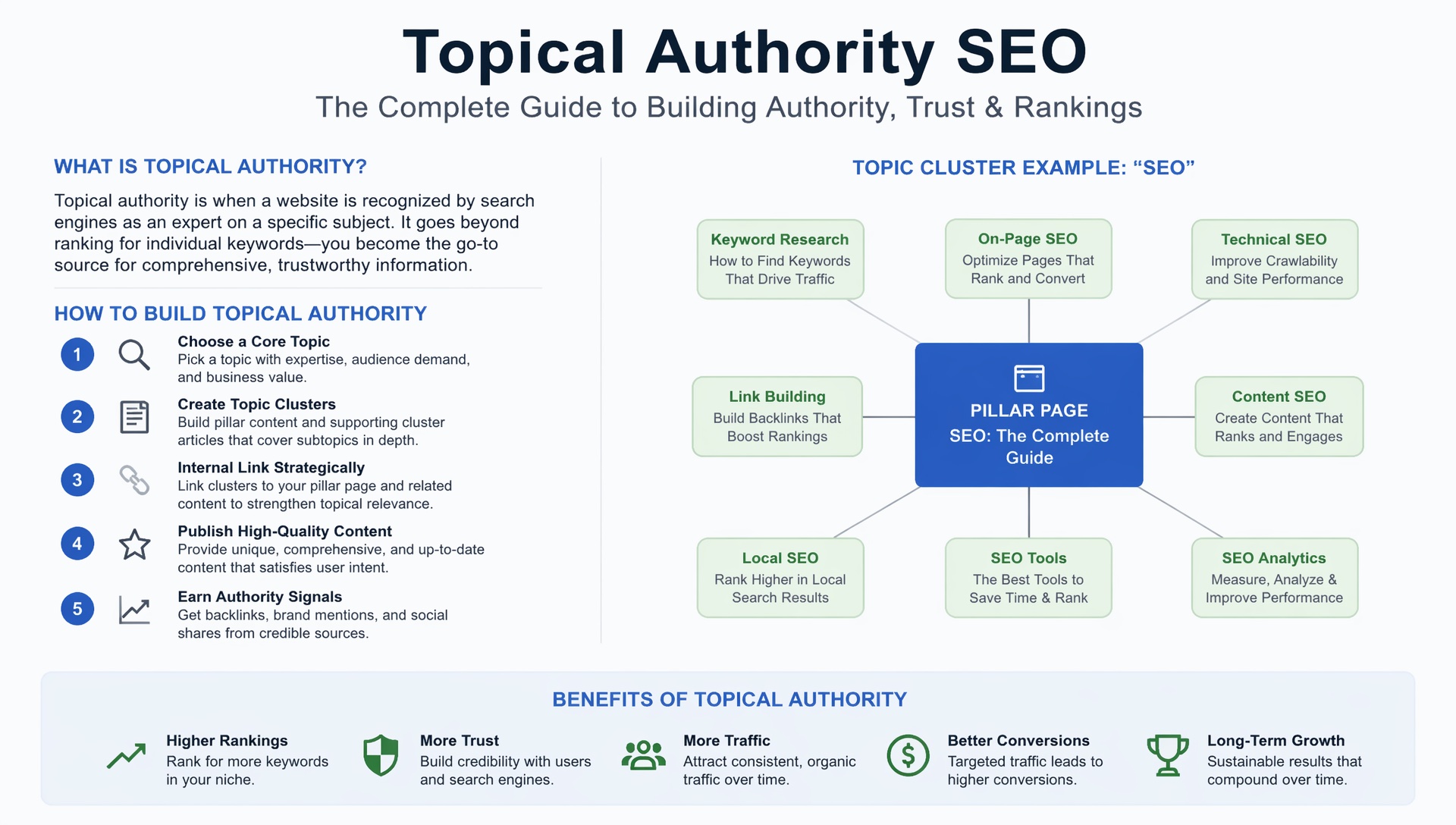
Depth beats scattered posts
Topical authority emerges when a domain covers a subject completely: definitions, comparisons, pricing, use cases, FAQs, methodology, and updates — linked into one cluster with shared entities. Thin blogs on random keywords do not build it. Search systems reward sites that reduce user need to visit ten domains for one topic.
For GEO, authority determines whether you are in the default retrieval set for category questions — before any single page’s AEO formatting is evaluated.
How topical authority differs from domain authority
Domain authority is a third-party proxy score for the whole site. Topical authority is subject-specific — you can be authoritative for “AI visibility” and unknown for “cybersecurity.” AI answers reflect this: cited for your category, absent outside it.
In Asian markets
Authority must exist per language. English topical depth does not transfer to Japanese category prompts without native cluster content and local digital PR. Audit authority market-by-market, not globally.
Example
A vendor ships 25 interconnected pages on GEO/AEO plus a public glossary. Organic rankings rise across the cluster; answer engines begin citing multiple URLs from the same domain for related prompts — a sign of topical authority taking hold.