CJK entity disambiguation
Updated June 20, 2026 · Reviewed by the Quratic editorial team
Definition
CJK entity disambiguation is the practice of resolving brand and product entities across Chinese, Japanese, and Korean scripts — simplified and traditional Han, kana, Hangul, and Latin transliterations — so AI systems map varied spellings to one canonical organization. Without it, mentions fragment and facts attach to the wrong subject.
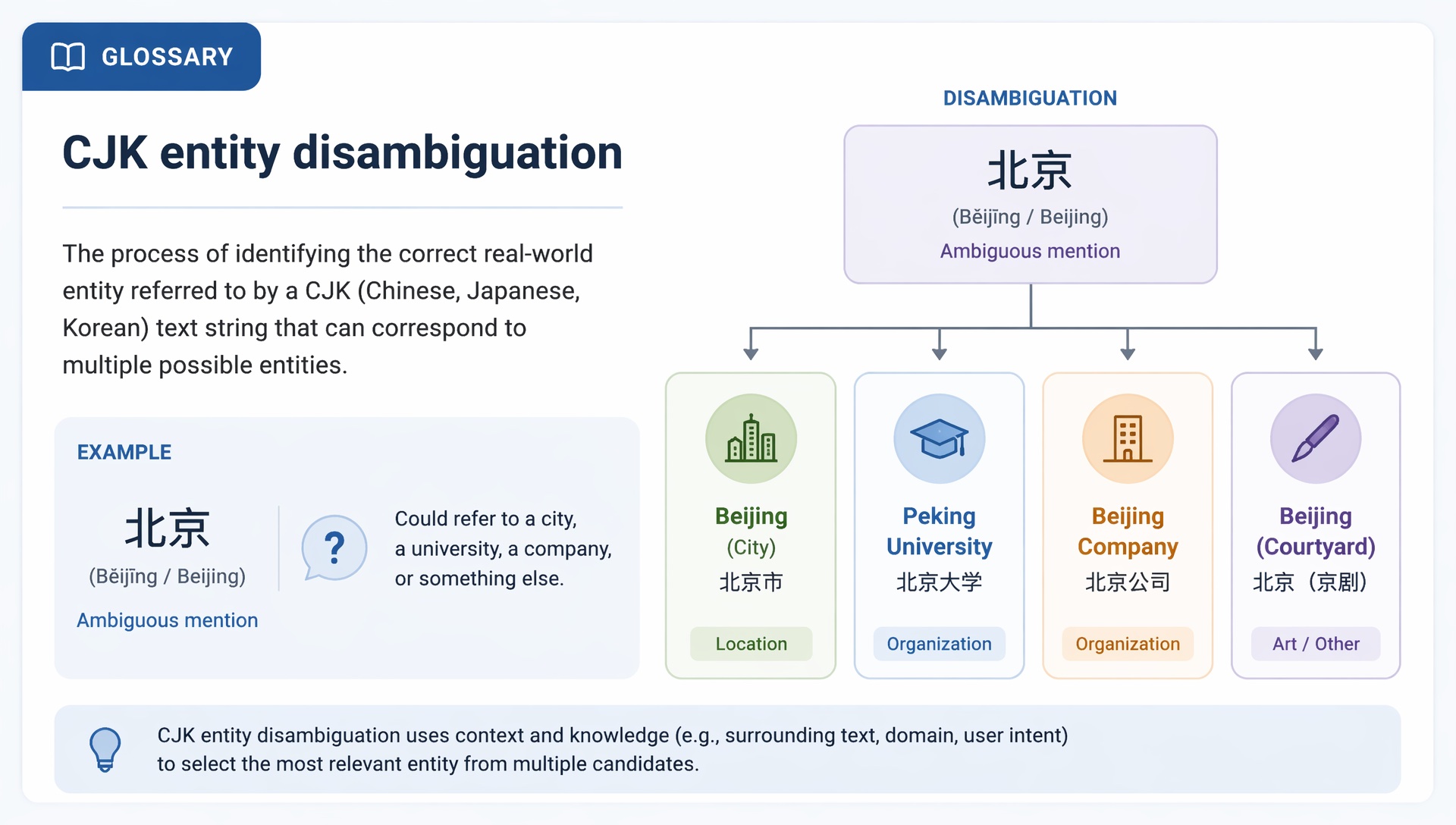
One brand, many spellings
A global brand might appear as Latin “Acme,” katakana アクメ, Hangul transliteration, and a Chinese trade name — each used in different prompts and sources. Models without linked aliases may treat these as unrelated strings, splitting share of voice and inviting hallucination when facts from one script contaminate another entity.
Implementation patterns
alternateNameinOrganizationschema for each official script- Localized About pages with explicit “also known as” lists
- Wikidata aliases linking script variants to one QID
- Consistent use of official localized names in App Store, local PR, and support docs
- Romanization standards documented internally ( Hepburn vs Kunrei for Japanese, etc.)
How CJK disambiguation differs from generic entity work
Latin-only brands face homonym collisions; CJK markets face script multiplicity on top. Entity disambiguation in Asia is incomplete if it only handles English Wikipedia disambiguation pages.
Example
A hardware vendor registers Wikidata aliases for simplified Chinese, katakana, and English names, then adds alternateName in JSON-LD. AI answers in Japanese and English begin aggregating mentions under one product story instead of splitting metrics across spellings.