Semantic SEO
Updated June 20, 2026 · Reviewed by the Quratic editorial team
Definition
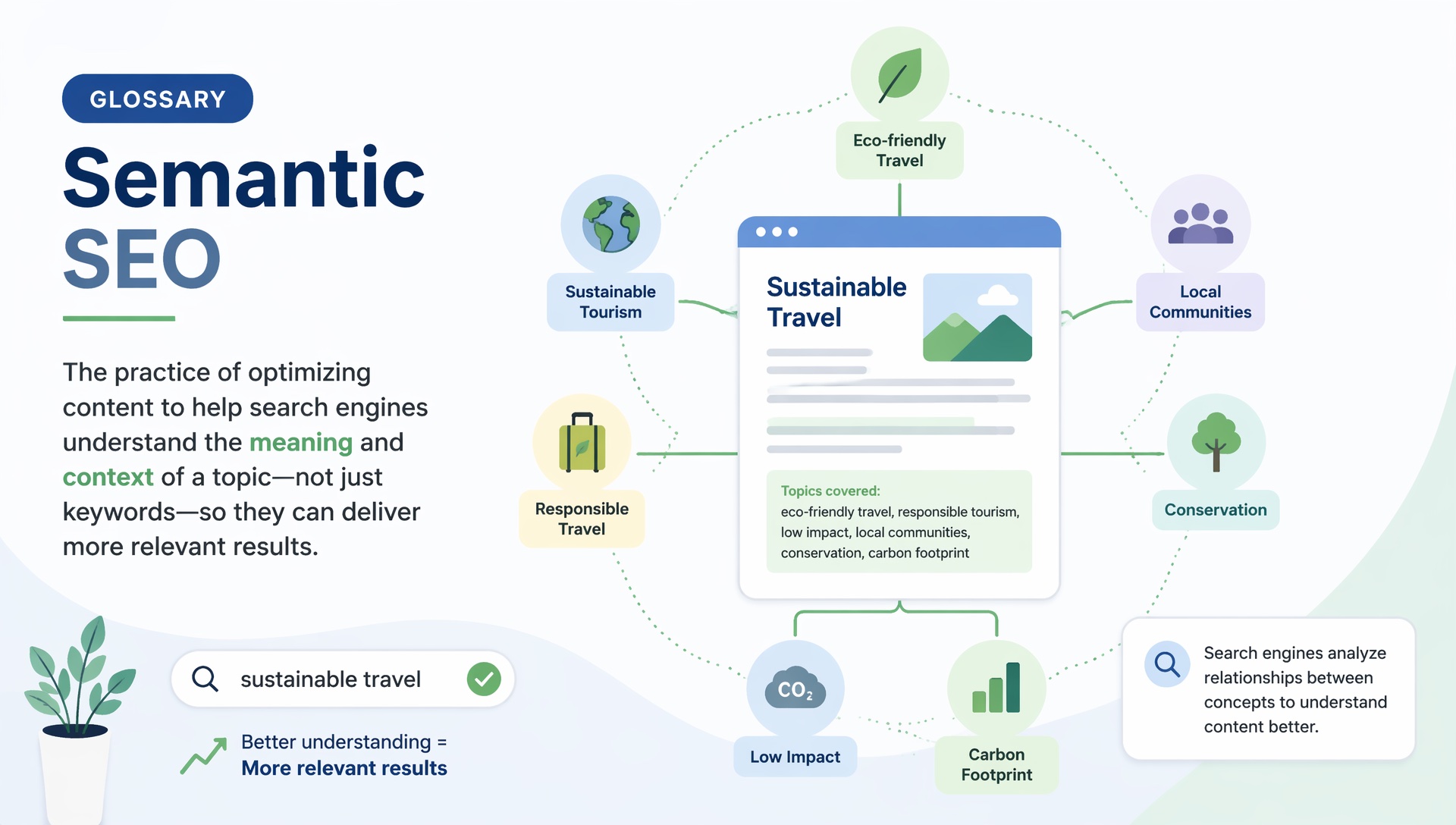
Semantic SEO is the practice of optimizing content for meaning, entities, and topical relationships — not keyword density alone — so search and AI systems understand what a page is about and how it connects to a subject area. It underpins both classic rankings and extractability for generative answers.
From strings to subjects
Semantic SEO treats a site as a topic graph: pillar pages, supporting definitions, comparisons, and FAQs linked by internal architecture and shared entities. Search engines use this to assess depth; answer engines use it to choose authoritative passages during RAG. Keyword stuffing without entity clarity fails both.
How semantic SEO differs from GEO
Semantic SEO is the foundation — crawlable, meaningful, well-linked content about a subject. GEO adds the citation layer: answer-first formatting, off-site mentions, and multi-engine measurement. You can execute semantic SEO and still lose AI citations if pages are not extractable (AEO) or if third-party sources do not corroborate your claims.
In Asian markets
Semantic depth must exist per language, not only in English hub pages. A thin translation does not create a semantic cluster in Japanese; native glossary entries, localized comparisons, and market-specific examples do. Hreflang helps discovery but does not substitute for in-language entity consistency.
Example
A cybersecurity vendor builds a topic cluster: “What is X,” “X vs Y,” “X pricing,” “X for financial services,” each with Article schema and cross-links. Organic rankings improve and Perplexity begins citing the definition page for category prompts.