E-E-A-T
Updated June 20, 2026 · Reviewed by the Quratic editorial team
Definition
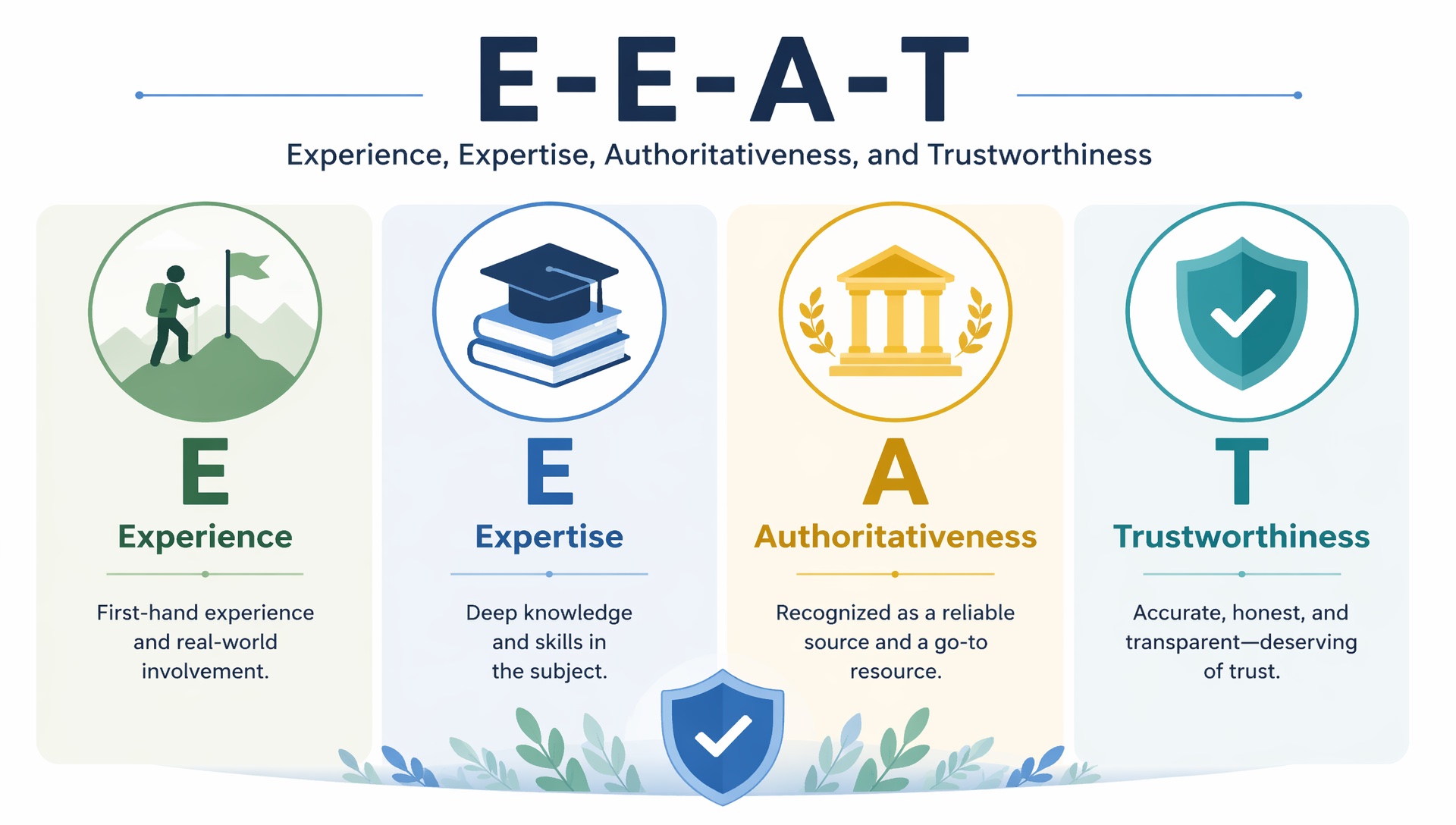
E-E-A-T — Experience, Expertise, Authoritativeness, and Trustworthiness — is Google's framework for assessing content quality, especially for topics that affect money, health, or safety. Strong E-E-A-T signals (named experts, sourcing, transparency, reputation) correlate with inclusion in AI summaries and citations.
Trust is a retrieval filter
E-E-A-T is not a single score in Search Console — it is a rubric raters use, and engineers approximate in ranking and summarization systems. For AI visibility, trust determines whether your page enters the evidence pool at all. Thin affiliate pages with no author and no sourcing lose to slower, expert content with citations — in organic rank and in LLM citations.
Practical E-E-A-T for GEO teams
- Experience: first-hand screenshots, methodology pages, dated research
- Expertise: named authors with credentials (
Personschema, bio pages) - Authoritativeness: press, industry citations, consistent brand entity
- Trustworthiness: clear ownership, contact, privacy, correction policy
Glossary and methodology pages — like this one — are trust assets: citable, sourced, maintained.
In Asian markets
Trust signals are local. A .com English press release may weigh less than coverage in Nikkei, Straits Times, or a category-specific local directory for the same market. E-E-A-T work must include regional reputation, not only US tech media.
Example
A health-adjacent fintech publishes compliance docs, names a licensed compliance officer on every article, and earns independent review coverage. AI answers begin citing its docs instead of unsourced forum threads with hallucination risk.