Knowledge graph
Updated June 20, 2026 · Reviewed by the Quratic editorial team
Definition
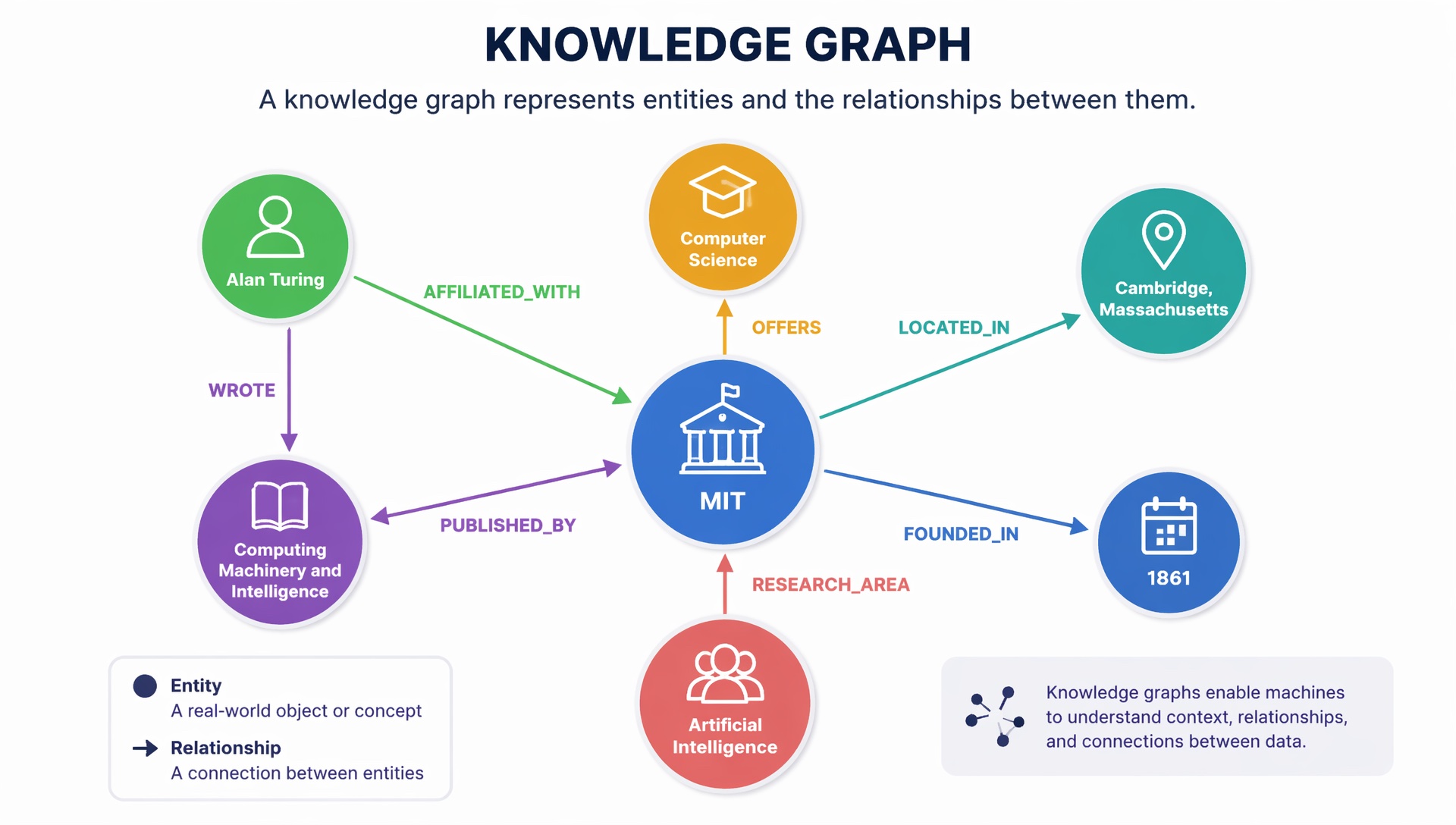
A knowledge graph is a structured network of entities (people, companies, products, places) and the relationships between them, used by search engines and AI systems to resolve facts and connect mentions. Google's Knowledge Graph is the best-known public instance; schema.org markup feeds entity graphs more broadly.
Graphs power disambiguation and facts
When a model or search engine “knows” your brand, it usually means your entity exists in a graph with typed edges: Organization → founder → Person, Product → manufacturer → Organization. That structure lets systems answer “who makes X?” without re-scraping your homepage every time. Weak graph presence means facts are re-inferred from noisy web text — increasing hallucination risk.
How knowledge graphs differ from sitemaps
Sitemaps list pages. Knowledge graphs list things. You influence graphs with structured data, consistent NAP (name, address, phone), authoritative third-party profiles, and entity disambiguation. SEO crawlability is necessary but not sufficient for graph membership.
In Asian markets
Graph coverage is uneven outside US/EU entities. Asian brands often have strong local listings (Google Business Profile, local directories) but no Wikidata item or English Wikipedia presence — limiting cross-language resolution. Investing in verifiable third-party profiles in each market sometimes matters more than a US press cycle for graph entry.
Example
A consumer brand earns a Knowledge Panel after consistent schema, Wikipedia-eligible press, and Wikidata creation. AI answers begin stating founding year and headquarters correctly instead of guessing from outdated blog posts.