Generative Engine Optimization (GEO)
Updated June 20, 2026 · Reviewed by the Quratic editorial team
Definition
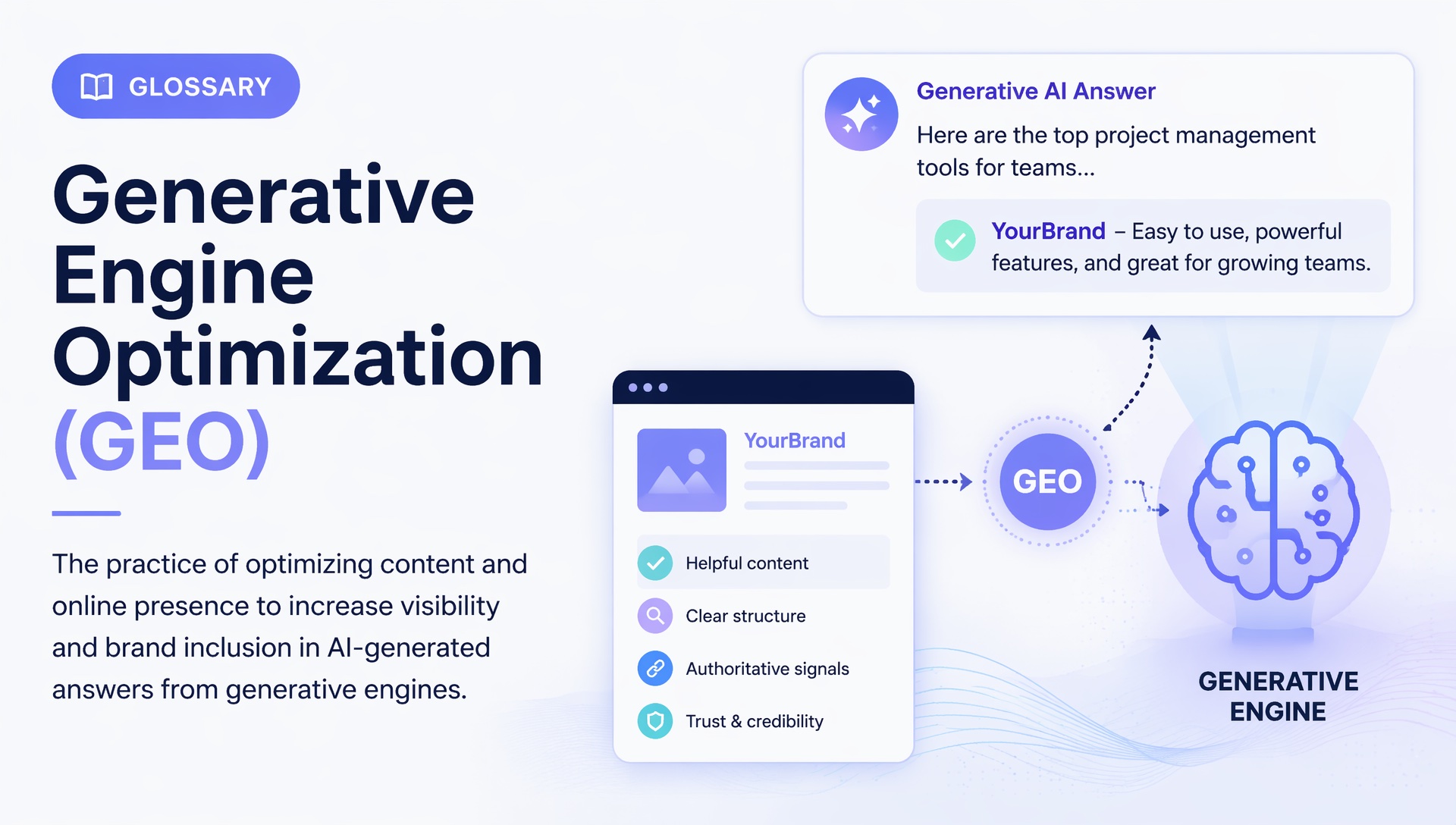
Generative Engine Optimization (GEO) is the practice of structuring content, entities, and off-site signals so generative AI engines mention and cite a brand inside their generated answers. Unlike SEO, which competes for ranked links, GEO competes to be named and described accurately inside the answer itself — across ChatGPT, Perplexity, Google AI Mode, and Gemini.
What GEO actually optimizes for
GEO treats the generated answer — not the results page — as the surface that decides a purchase. When a buyer asks an AI engine “what are the best AI visibility tools for Asian markets,” the model returns a synthesized paragraph with a short list of named brands. GEO is the discipline of making your brand one of those named, well-described options, and making the model cite a source you control.
That breaks into three workstreams:
- Content engineering — definitions, comparisons, and answer-first passages a model can lift cleanly. This is the AEO layer.
- Entity authority — a consistent, machine-resolvable brand entity across your site, knowledge graph, and third-party mentions.
- Earned signal — reviews, community discussion, and press that the model encounters when it retrieves and grounds its answer.
How GEO differs from SEO and AEO
SEO optimizes for position in a list of links. GEO optimizes for inclusion and framing inside a generated answer — a user may never see, let alone click, a link. AEO is the narrower, page-level craft of making a single passage extractable; GEO is the program-level question of whether the brand is citation-worthy across the whole AI ecosystem. AEO determines whether a page can be quoted. GEO determines whether the brand gets named at all.
In Asian markets
GEO is not a single global game. The same prompt, asked from Singapore, Tokyo, and Seoul, can return different brands, different sources, and different framing — because model preference, content language, and the availability of localized sources vary by country. A brand that is cited consistently in English-language answers can be effectively invisible in Japanese- or Korean-language answers covering the same category. Treating GEO as one worldwide score hides exactly the gaps that matter for multilingual GEO.
Example
A B2B SaaS brand restructures its category page into a 55-word answer block, adds an Organization entity with consistent sameAs links, and earns three independent Reddit and review-site mentions. Within a measurement cycle it begins appearing in Perplexity answers for “best [category] tool” — first in English, then, after localized content ships, in Bahasa Indonesia.