Internal linking
Updated June 22, 2026 · Reviewed by the Quratic editorial team
Definition
Internal linking is the practice of connecting pages within the same site through hyperlinks — distributing crawl priority, clarifying topical relationships, and helping users and machines navigate your content graph. Strong internal linking supports semantic SEO and makes answer-worthy pages discoverable for extraction.
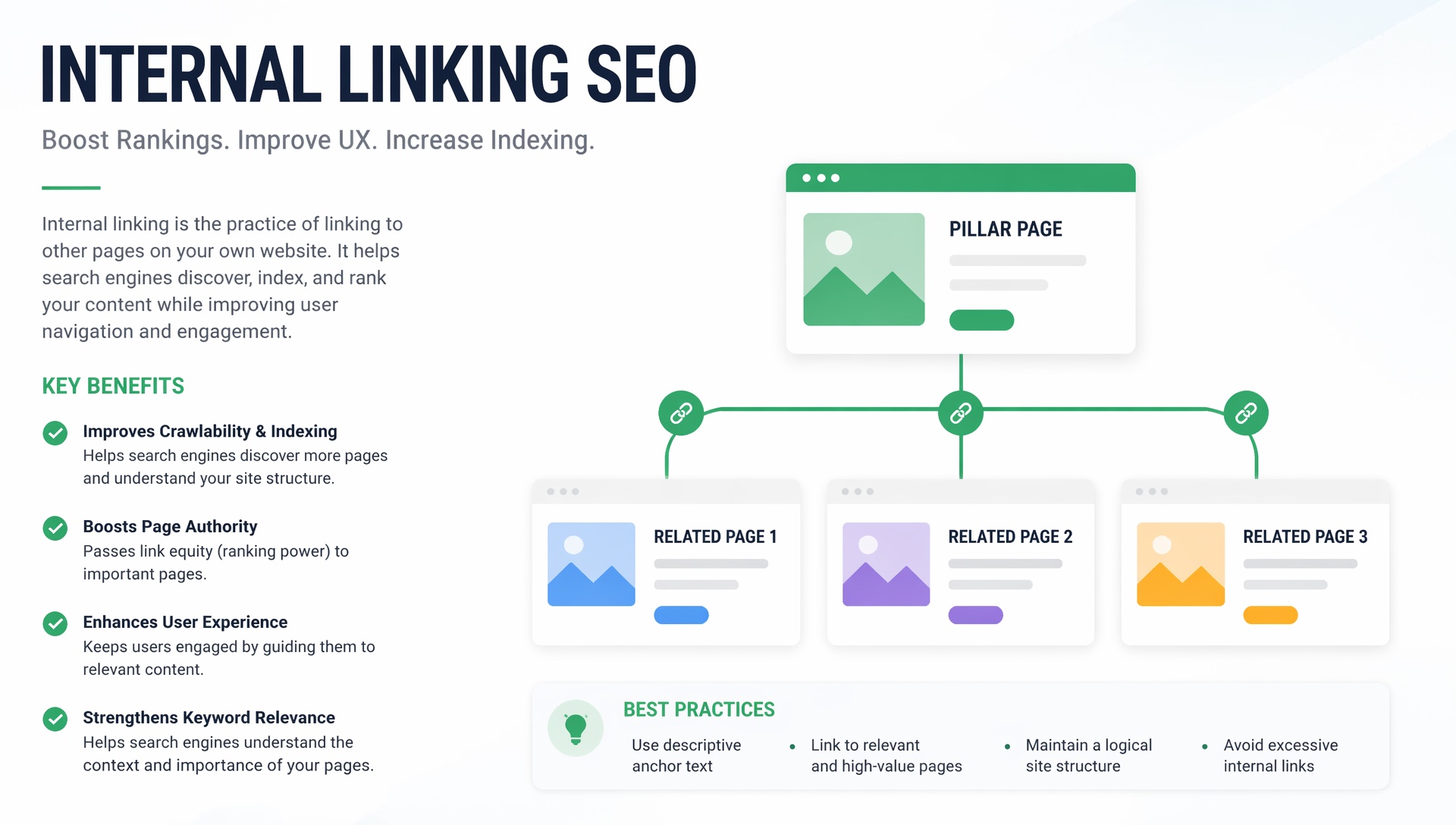
Architecture as a ranking and retrieval signal
Internal links declare which pages matter and how topics connect. Hub-and-spoke models — pillar page linked from supporting articles, glossary entries cross-linked, FAQs linked from product pages — build topical authority and ensure crawlers reach deep URLs within crawl budget limits.
For AEO, link from high-traffic pages to answer blocks on definitional URLs so those passages accumulate signals and inbound internal anchor text.
How internal linking differs from backlinks
Internal links do not pass external trust — they organize and prioritize what you already have. Backlinks import third-party credibility. Both matter: backlinks get you into the conversation; internal linking ensures your best extractable page is the one that ranks and gets retrieved.
In Asian markets
Locale sites often orphan translated pages — linked from a language switcher but not from within the local content graph. Reciprocal internal linking between Japanese blog posts, Japanese product pages, and Japanese glossary entries keeps locale clusters coherent for multilingual GEO.
Example
A brand adds “Related terms” and “Further reading” links from every blog post to glossary pages. Definitional prompts begin citing glossary URLs instead of scattered blog paragraphs — higher citation rate, cleaner extracts.