Canonical URL
Updated June 22, 2026 · Reviewed by the Quratic editorial team
Definition
A canonical URL is the preferred version of a page declared with rel="canonical" when duplicate or near-duplicate URLs exist — parameters, HTTP/HTTPS, www variants, or syndicated copies. It consolidates ranking signals on one URL and prevents index bloat.
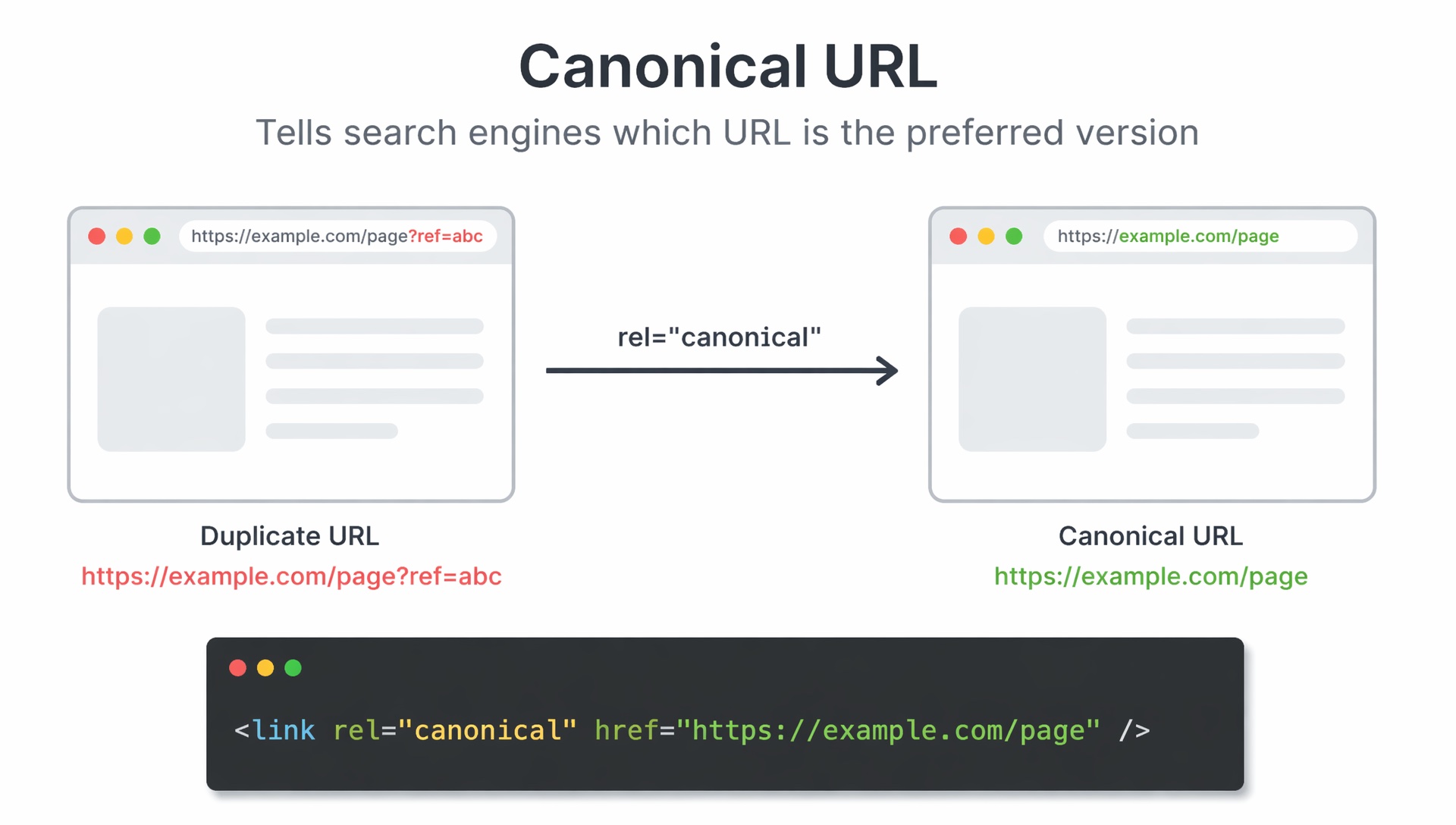
One URL to rule the duplicates
Faceted navigation, UTM parameters, print views, and trailing-slash variants can create dozens of URLs with identical content. <link rel="canonical" href="https://example.com/preferred/"> tells Google which copy to index and rank. Wrong canonicals — pointing blog tags at the homepage, cross-domain errors — can de-index valuable pages.
How canonical differs from hreflang
Hreflang says multiple URLs are intentional alternates for different locales. Canonical says multiple URLs are duplicates of one preferred URL. Use both together carefully: each locale page canonicals to itself while hreflang links the cluster.
In Asian markets
International sites sometimes canonical all locales to English / — destroying local rankings and AI retrieval of in-language pages. Each locale URL should typically self-canonical unless content is truly duplicate. Pair with international SEO audits before scaling multilingual GEO.
Example
/pricing?utm_source=newsletter canonicals to /pricing. Rank and snippet signals consolidate; AI engines retrieve the clean URL without parameter noise in citations.