International SEO
Updated June 22, 2026 · Reviewed by the Quratic editorial team
Definition
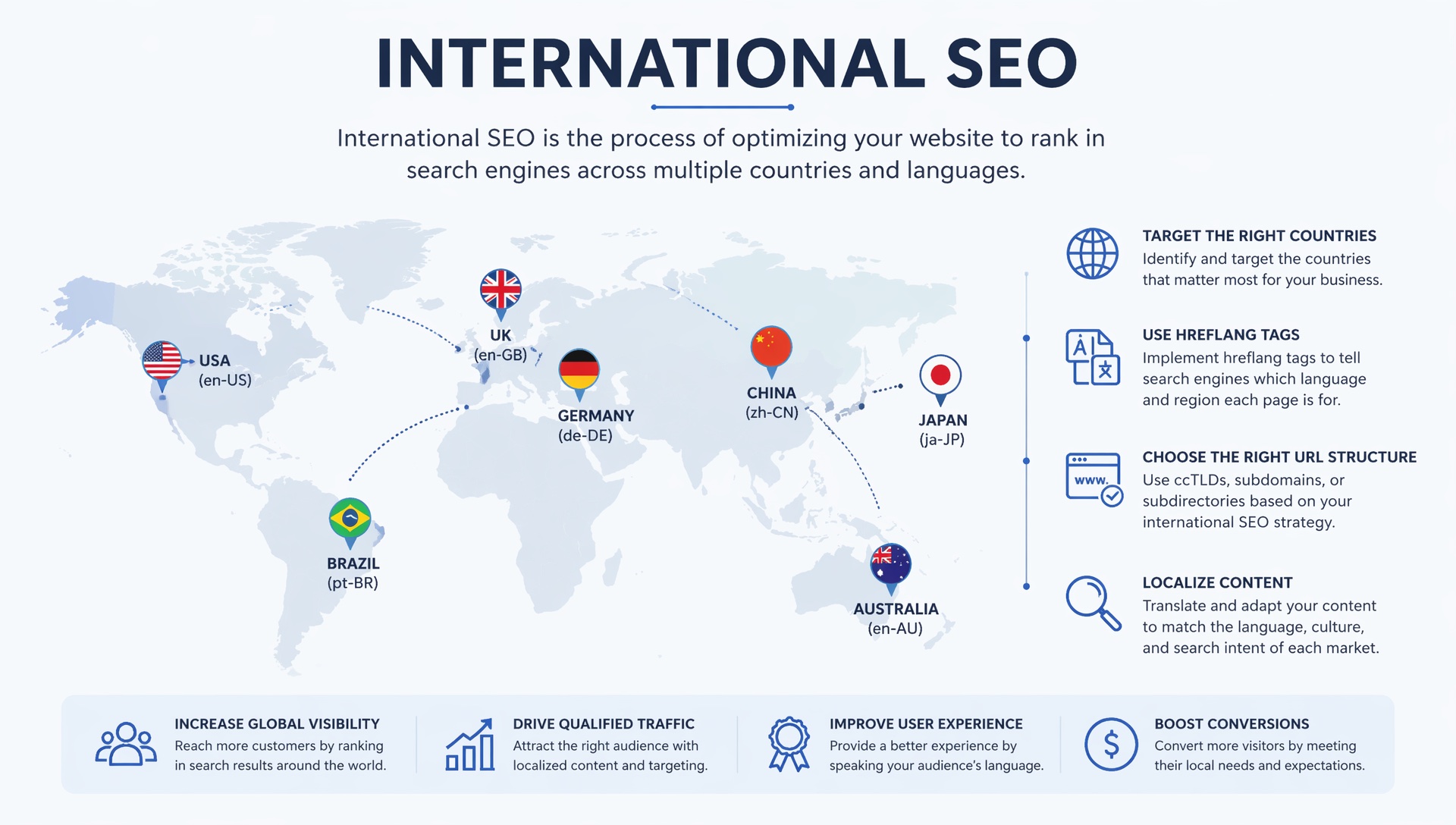
International SEO is the discipline of optimizing a website so search engines serve the correct language and country version to each audience — via URL structure, hreflang, localized content, and geo-targeting in Search Console. It is the technical foundation for multilingual GEO across markets.
Structure before scale
International SEO picks URL patterns:
- ccTLD (
example.jp) — strongest geo signal, highest ops cost - Subdirectories (
example.com/jp/) — common default - Subdomains (
jp.example.com) — middle ground
Then implements reciprocal hreflang, locale sitemaps, canonical URL hygiene, and native content — not duplicate English. Google Search Console geo-targeting applies to ccTLD and subdomain setups.
How international SEO differs from multilingual GEO
International SEO ensures the right URL ranks in the right country. Multilingual GEO ensures the brand is cited in AI answers in each language. Perfect hreflang with thin translations fails GEO; strong GEO without hreflang creates duplicate chaos in organic search. Run both in parallel.
In Asian markets
Quratic’s six-market footprint is exactly where international SEO is non-optional: multiple scripts, local answer engines, and divergent model market share. Treat each market as a product launch — localized answer blocks, local citations, and entity consistency across scripts (CJK entity disambiguation).
Example
A brand migrates from ?lang=jp parameters to /jp/ subdirectories with hreflang clusters and native FAQ content. Organic traffic shifts from English / to Japanese URLs; Japanese AI answers begin citing localized pages within two measurement cycles.