Title tag
Updated June 22, 2026 · Reviewed by the Quratic editorial team
Definition
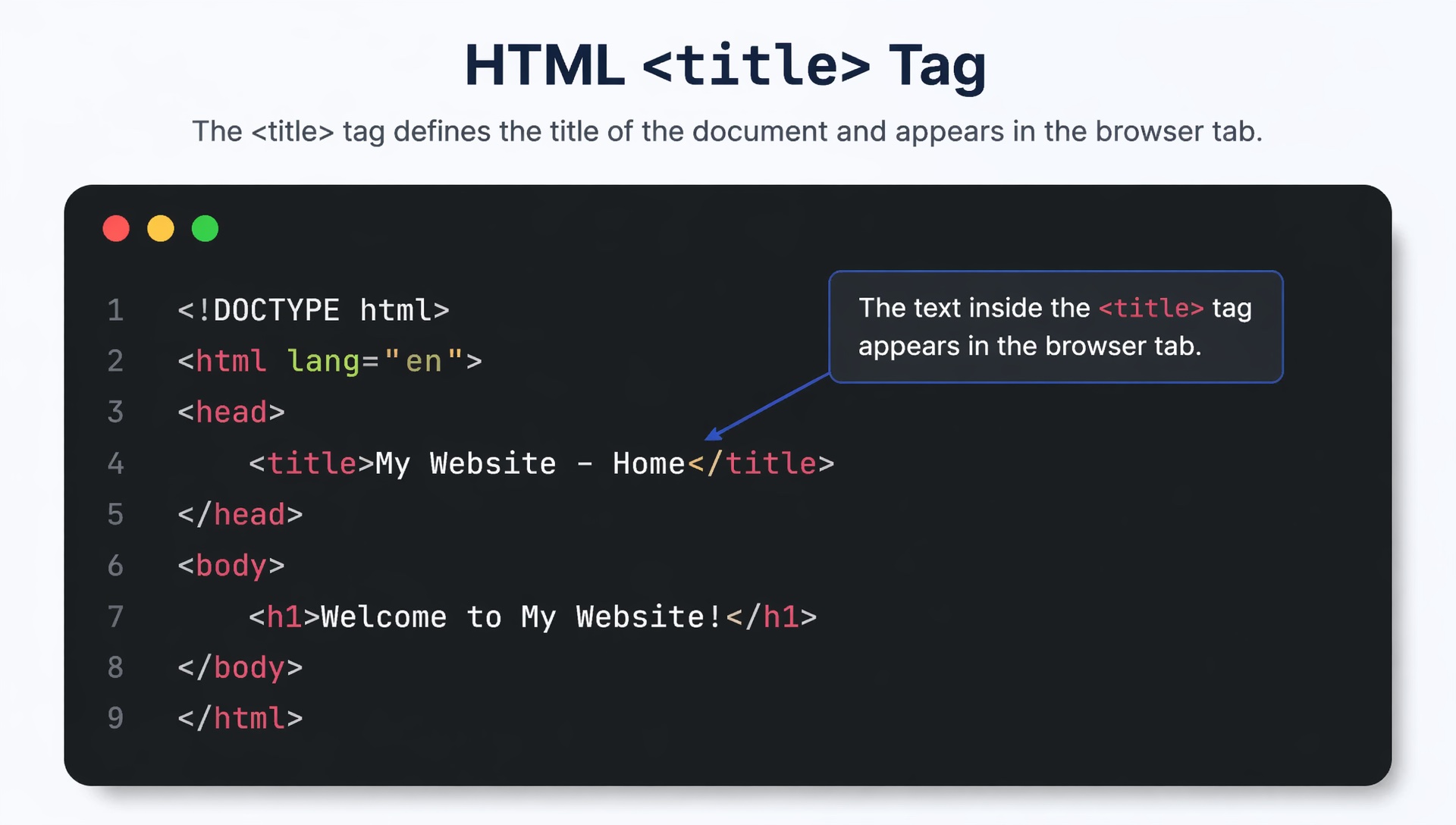
A title tag (<title>) is the HTML element naming a page; search engines use it as the primary clickable headline in results and as a strong relevance signal. Clear, unique titles help rankings, SERP CTR, and machine understanding of page intent.
The headline machines read first
The <title> element should describe the page uniquely: primary topic + brand or market modifier. Avoid boilerplate on every URL (“Home | Brand | Best Software”). Google may rewrite titles from headings or anchor text if titles are vague or spammy — but starting with a precise title reduces unwanted rewrites.
For definitional pages, mirror query intent: “Generative Engine Optimization (GEO) — Definition | Brand” supports both SEO and user clarity.
How title tags differ from H1
The <title> is for SERP and browser chrome; the <h1> is the on-page headline. They can differ slightly but should not conflict on topic. Answer engines weight visible content heavier than title alone for synthesis — pair strong titles with answer blocks below the H1.
In Asian markets
Character display width differs: Japanese titles may need fewer characters for clean SERP display. Localize titles per locale; do not reuse English titles on hreflang alternates.
Example
Changing a generic title “Pricing” to “AI Visibility Pricing — Singapore & Asia | Quratic” improves rank relevance for geo-modified pricing queries and aligns with how buyers search.