Meta description
Updated June 22, 2026 · Reviewed by the Quratic editorial team
Definition
A meta description is an HTML meta tag summarizing a page's content for search engines; Google may use it as the snippet text below the title in results. It does not directly drive ranking but influences click-through and can reinforce entity and topic clarity when well written.
Snippet copy, not a ranking lever
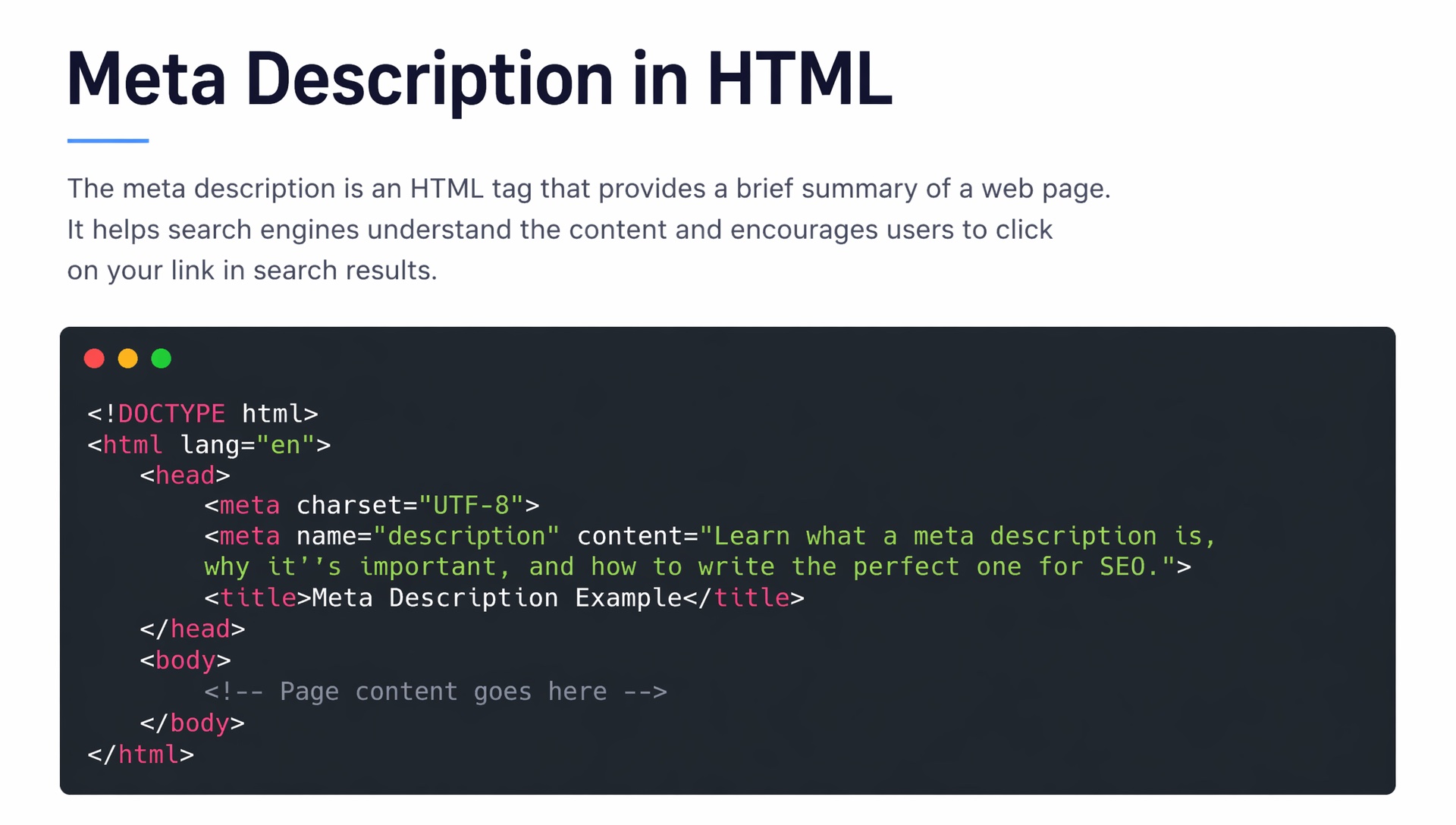
<meta name="description" content="..."> suggests how Google should summarize your page in the SERP. Google often rewrites descriptions from on-page content — especially if the meta tag is missing, duplicate, or keyword-stuffed. Write unique descriptions per URL: primary topic, differentiator, call to action — in 150–160 characters for Latin scripts (allow more room for CJK display).
How meta descriptions differ from answer blocks
Answer blocks target extraction into answers and featured snippets. Meta descriptions target SERP presentation for clicks. Both should align factually; do not put claims in meta that the page body does not support (E-E-A-T).
In Asian markets
Localized meta descriptions per hreflang alternate — not English duplicates — improve CTR in local SERPs and reinforce language signals. AI systems may still ignore meta tags for synthesis; on-page answer blocks matter more for GEO.
Example
A product page meta reads: “AI visibility tracking for Singapore, Japan, and Korea — residential IP collection, multi-model coverage.” CTR rises on branded queries; the same facts appear in the opening answer block for AI extraction.