Prompt surfacing
Updated June 20, 2026 · Reviewed by the Quratic editorial team
Definition
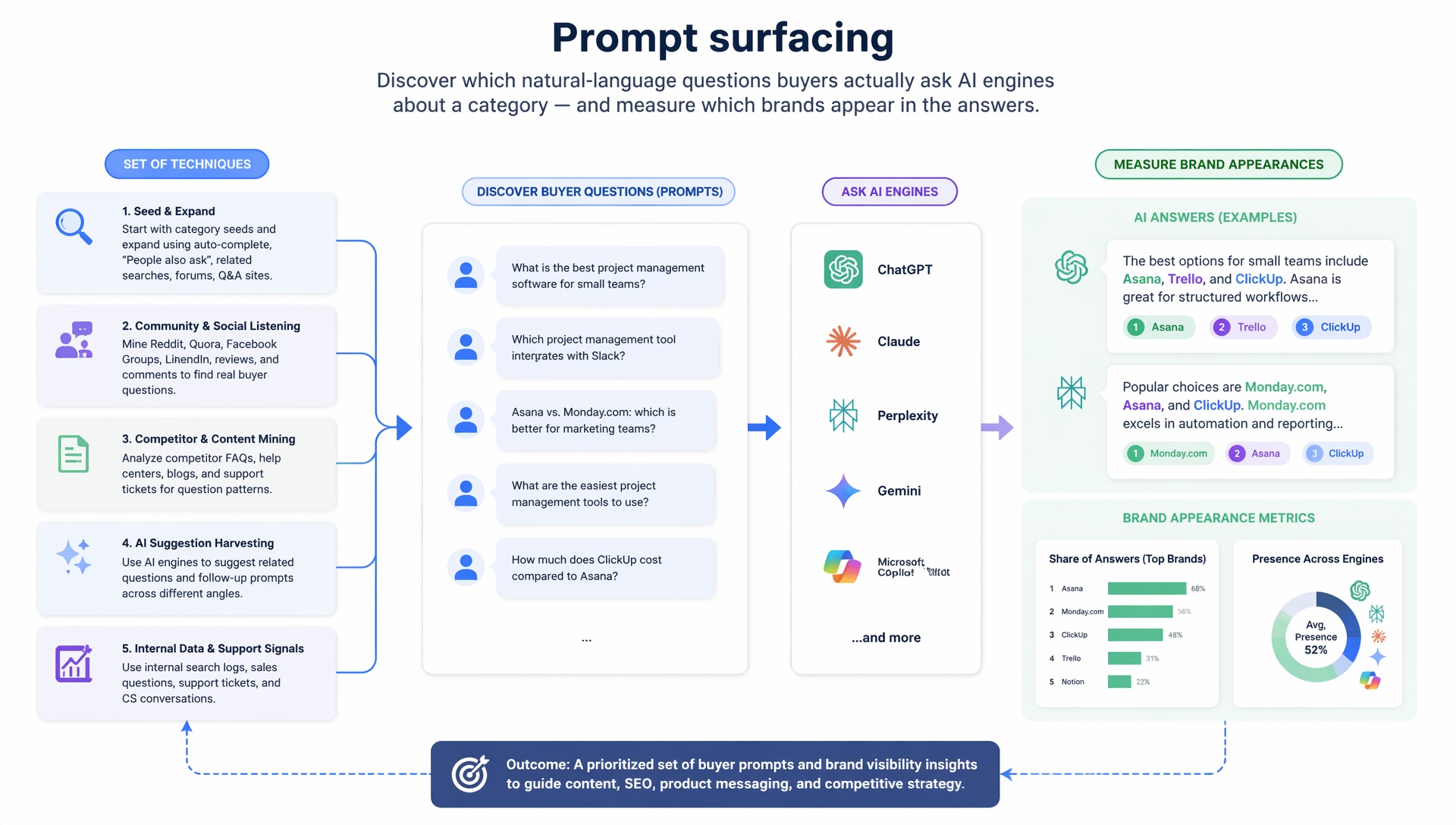
Prompt surfacing is the set of techniques for discovering which natural-language questions buyers actually ask AI engines about a category — and measuring which brands appear in the answers. It replaces keyword volume research with prompt libraries tied to visibility outcomes.
Keywords were proxies; prompts are the unit
SEO tools extrapolate from search volume. AI visibility work starts from prompts — full questions with intent, locale, and phrasing variants (“best,” “vs,” “for enterprises,” “in Singapore”). Prompt surfacing builds the library: seed from sales calls, support tickets, autocomplete, community threads, and query fan-out patterns engines use internally. You then measure mention rate per prompt, not rank per keyword.
How prompt surfacing differs from rank tracking
Rank tracking assumes one canonical query maps to one SERP. Prompt surfacing assumes dozens of paraphrases map to different answers — and that small wording changes flip which brand is named first. Tracking 20 prompts beats tracking one head term for understanding GEO exposure.
In Asian markets
Prompts must be collected in the language buyers use. Romanized Japanese brand names, Singlish phrasing, and formal Korean business language produce different answer sets than translated English seeds. Surfacing prompts from local sales and support teams — then sampling answers from residential IPs in that market — is how Asian brands avoid US-centric blind spots.
Example
A team surfaces 40 prompts across “category + country” and “category + vs + competitor” patterns. They find the brand is visible on English “best X Singapore” prompts but absent on Bahasa equivalents — directing content investment to the gap, not to more English blog posts.