Model grounding
Updated June 20, 2026 · Reviewed by the Quratic editorial team
Definition
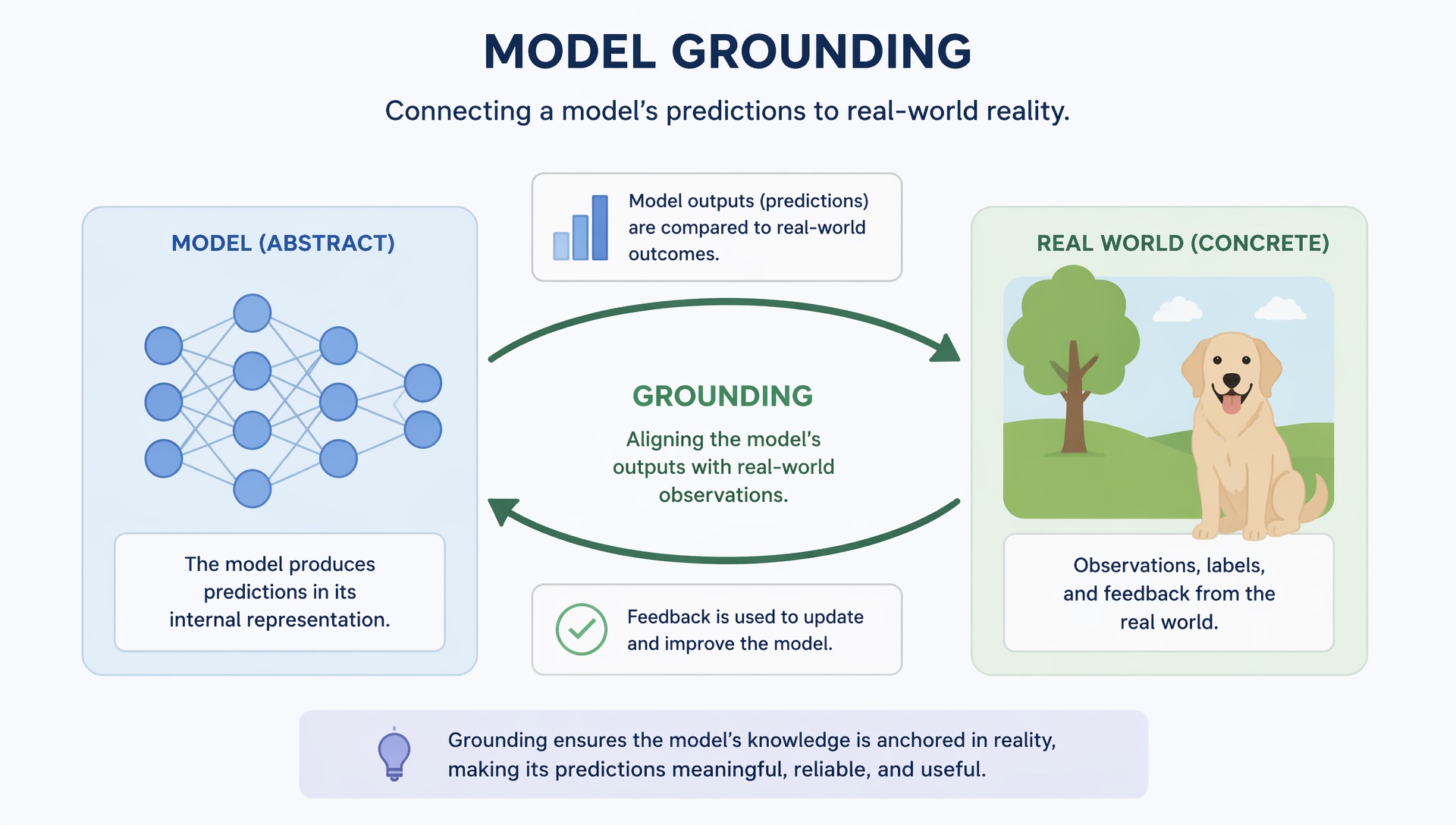
Model grounding is the process of anchoring an LLM's generated answer to retrieved, verifiable sources — URLs, documents, or structured facts — so claims can be cited rather than invented. Grounding reduces hallucination and determines which domains appear as evidence in the final answer.
Why models cite some sites and not others
Grounding is the filter between “the model knows something” and “the model shows its work.” After retrieval, the system selects passages, maps them to claims, and attaches LLM citations. Pages with clear definitions, dated facts, consistent entities, and E-E-A-T signals survive grounding; vague marketing copy does not. GEO is largely the practice of making your domain grounding-friendly.
How grounding differs from RAG
RAG is the architecture: retrieve, then generate. Grounding is the quality bar on that pipeline — did the output stay tied to evidence? An engine can run RAG and still produce ungrounded sentences if confidence thresholds are loose. When practitioners say a brand is “grounded in sources,” they mean citations in the user-visible answer, not merely that retrieval ran internally.
In Asian markets
Grounding corpora are language- and locale-biased. A model grounding on English listicles will cite English domains even for a Korean prompt unless localized sources rank in retrieval. Brands need in-language primary sources — docs, pricing, support articles — not English pages with hreflang tags alone.
Example
Google AI Overviews cites a vendor’s FAQ with explicit pricing and FAQPage schema; a competitor’s JavaScript-heavy pricing page never enters the grounded set despite ranking organically.