LLM citation
Updated June 20, 2026 · Reviewed by the Quratic editorial team
Definition
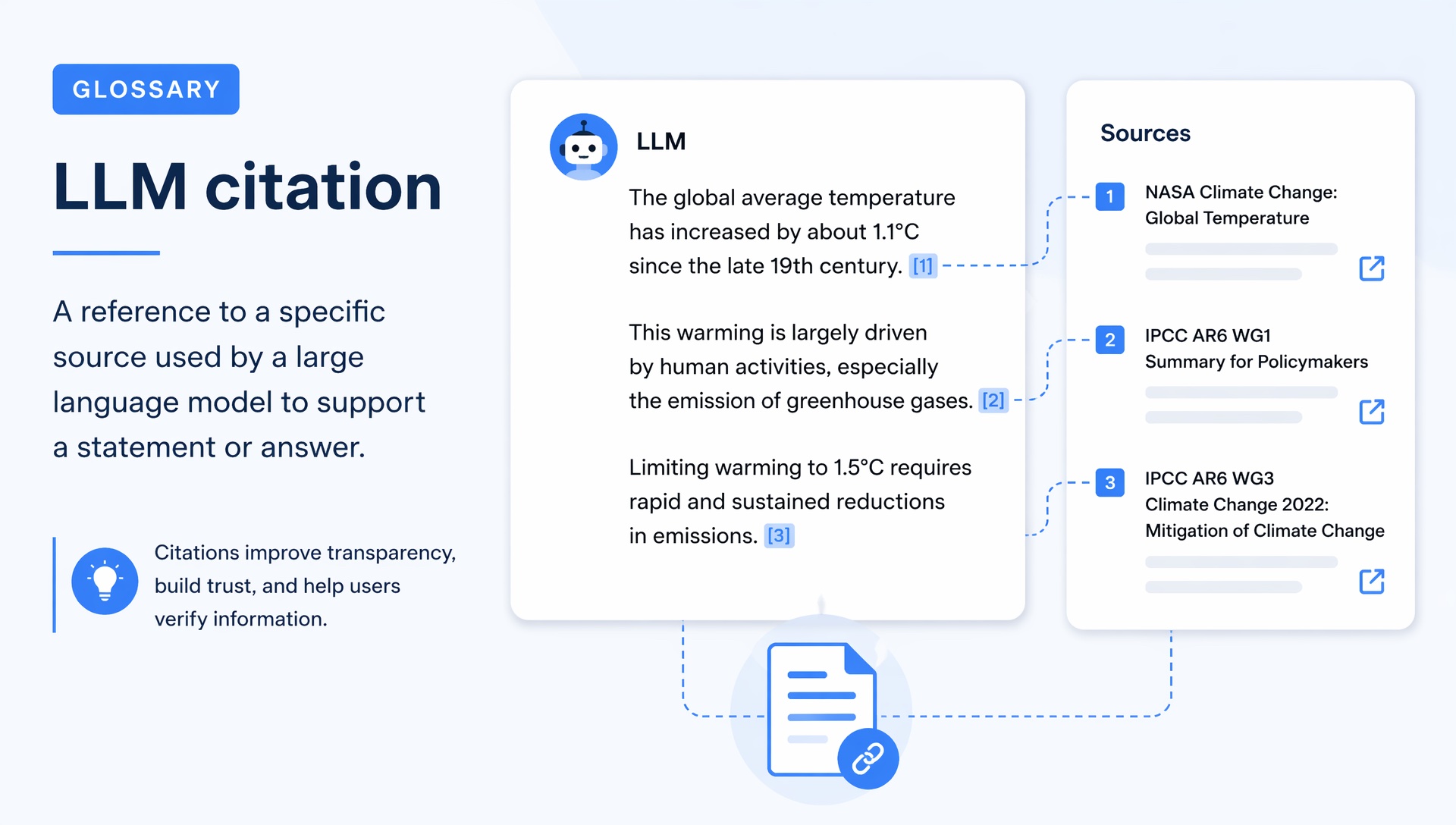
An LLM citation is when a large language model names a source — usually as an inline link, footnote, or reference card — to support a claim in its generated answer. Unlike a traditional SERP click, the citation is the trust signal: it tells the user (and the brand) which domain the model treated as evidence.
Why citations matter more than clicks
In generative search, the model’s answer is the interface. A buyer reads the summary, trusts the named sources, and forms a shortlist — often without visiting any site. An LLM citation is therefore the new impression: it signals that the model encountered your domain during retrieval or browsing and chose it as supporting evidence. Tracking citation frequency, position, and co-citation patterns is how brands measure whether GEO work is landing.
How LLM citations differ from backlinks and SERP listings
A backlink is a static graph edge crawlers discover. A SERP listing is an ranked URL slot. An LLM citation is contextual — the same domain may be cited on one prompt and absent on the next, depending on retrieval, grounding, and prompt phrasing. Citations also vary by engine: Perplexity surfaces numbered source cards; ChatGPT may inline-link; Google AI Overviews blend both. Measuring one engine is not measuring the category.
In Asian markets
Citation pools are market-local. When Quratic samples answers from residential IPs in Tokyo versus Singapore, the cited domain set often diverges — local press, directories, and community sites enter the pool while US-default sources drop out. A brand cited heavily in English Perplexity answers can show a near-zero citation rate in Japanese AI Mode for the same product category. Treating citations as a global count hides the gap that matters for regional revenue.
Example
A fintech brand earns citations from two independent review sites and its own docs page for “best business banking app Singapore.” The same brand is uncited for the Japanese equivalent prompt until in-language comparison content and local media mentions enter the retrieval set.