AI SERP
Updated June 20, 2026 · Reviewed by the Quratic editorial team
Definition
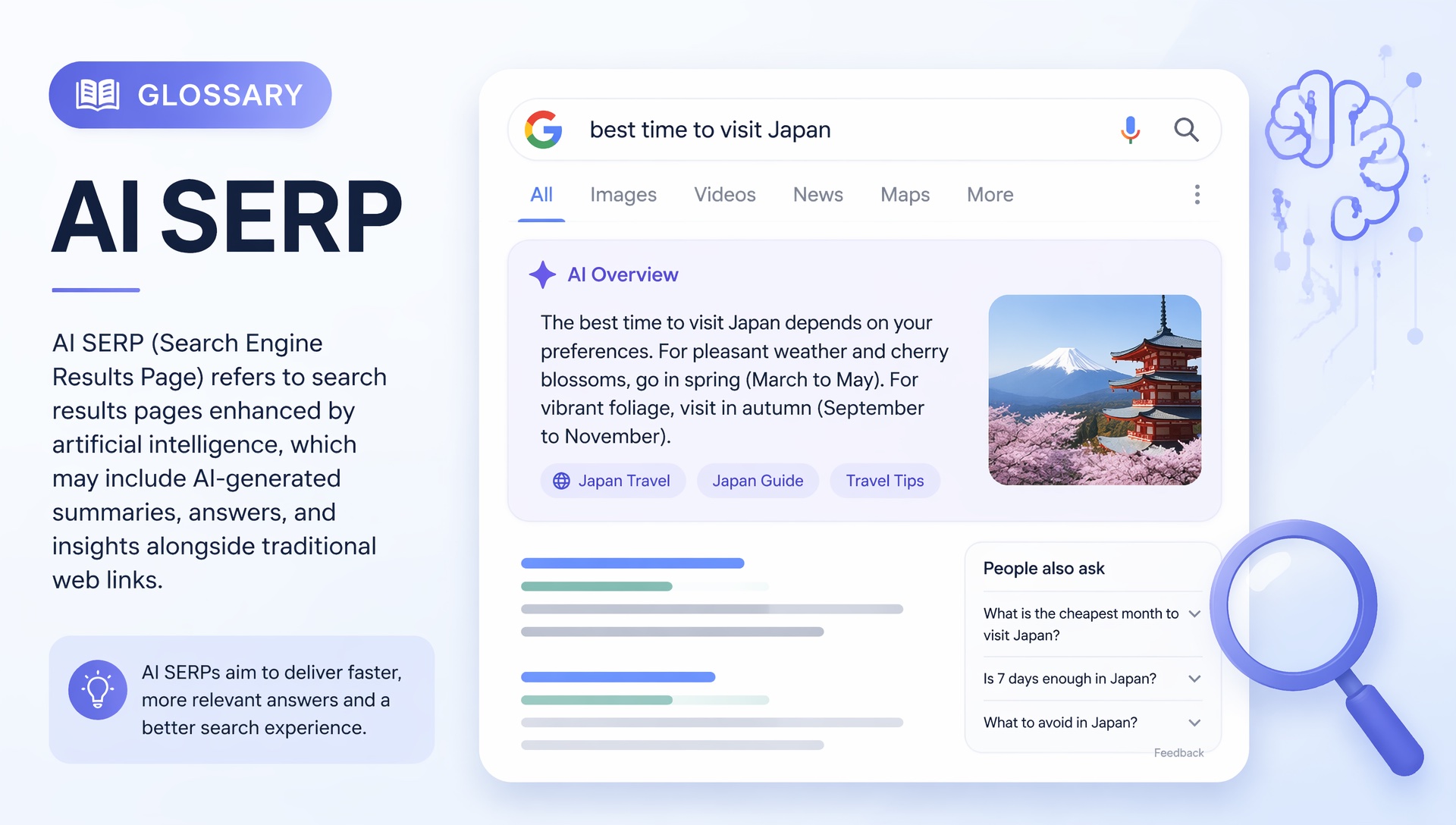
An AI SERP is a search results experience where generative AI components — summaries, follow-up prompts, cited sources — share or dominate the page alongside traditional links. The term captures that modern SERPs are no longer ten blue links; they are blended surfaces where answer visibility and rank visibility must be measured separately.
The split-screen problem
Traditional rank tracking reports position for URLs. An AI SERP adds a second layer: who the summary names, what it claims, and which domains it cites. A brand can show position 1 in rank software while the generative layer above the fold recommends alternatives. Reporting both lenses — rank and AI visibility — is how teams avoid false confidence from legacy metrics.
How an AI SERP differs from a chatbot answer
ChatGPT and Perplexity are off-SERP answer engines. An AI SERP still lives on google.com (or local answer engines like Naver): the user started in search, and generative UI met them there. Optimization blends classic SEO (crawl, index, relevance) with GEO (citation-worthy summaries, entity clarity, third-party mentions).
In Asian markets
Generative SERP components appear at different rates and in different layouts by country. Mobile-first markets may see compact summaries; desktop may show expanded source cards. Sampling must use local devices and IPs — not US datacenter proxies — or the AI SERP you measure is not the one your buyer sees.
Example
A split-screen report shows organic #1 for a brand keyword while the AI Overview names two competitors and cites a third-party review site. The remediation path is GEO and source development, not title-tag tweaks alone.