AI sentiment
Updated June 20, 2026 · Reviewed by the Quratic editorial team
Definition
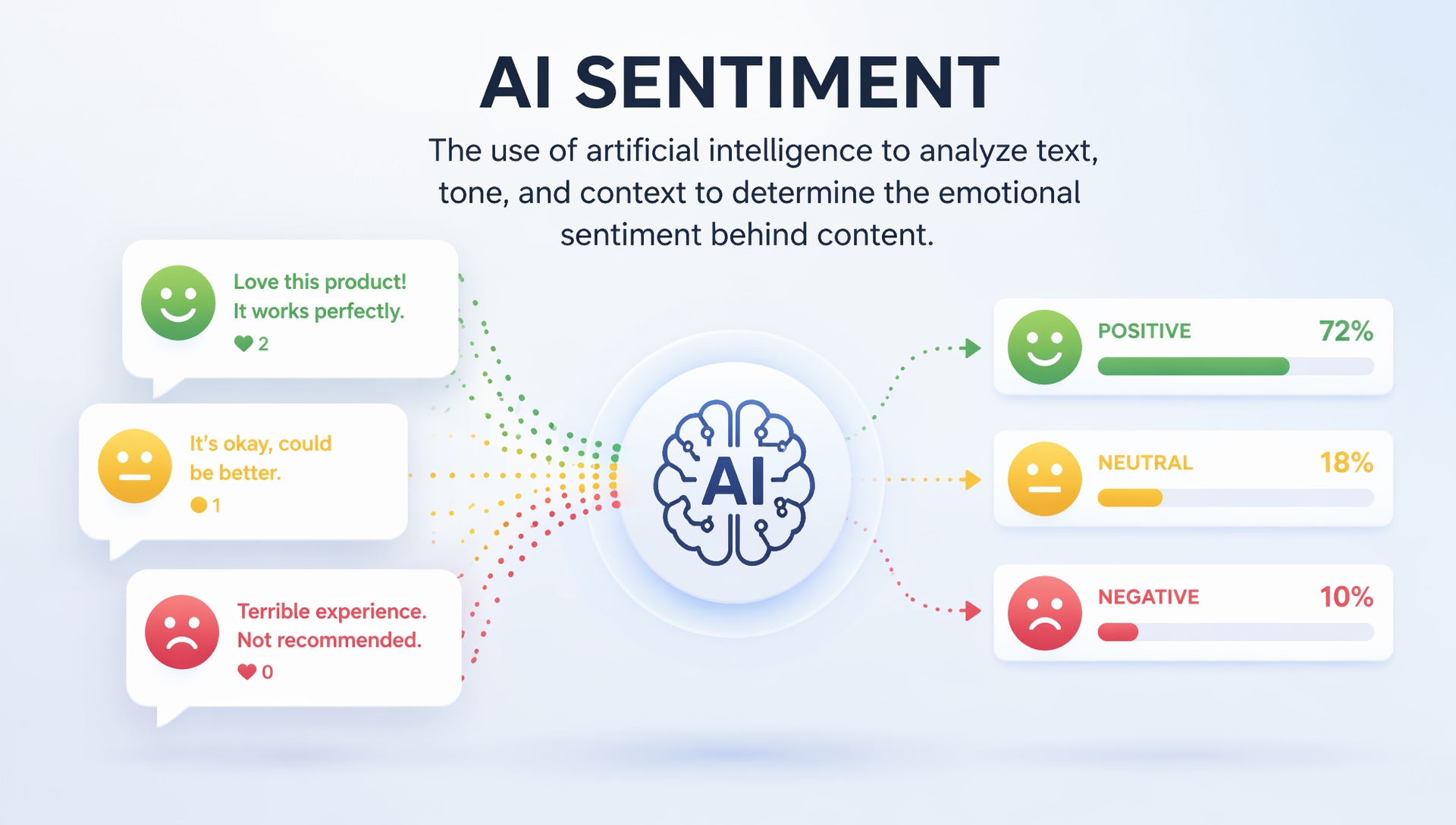
AI sentiment is how positively, neutrally, or negatively a brand is described inside AI-generated answers — tone, adjectives, and framing — independent of whether the brand is mentioned first or cited. Two brands with equal mention rate can diverge sharply on sentiment.
Visibility without praise
Mention rate tells you if you appear; sentiment tells you how. A brand cited as “expensive but unreliable” is visible but harmed. AI sentiment tracking classifies descriptive clauses — recommended, leading, controversial, outdated — so GEO programs optimize framing, not only frequency.
How AI sentiment differs from social listening
Social listening counts posts humans wrote. AI sentiment reads model-generated prose that many buyers treat as objective. One outdated blog post can poison sentiment until fresher sources enter retrieval. Remediation is GEO (new facts, third-party updates), not reply threads.
In Asian markets
Sentiment lexicons differ by language — direct English praise reads differently in Japanese business context. Classifiers must run on the answer language, not translate-then-score, or nuance is lost.
Example
A brand’s share of voice rises after a viral launch, but sentiment turns negative when models echo early outage reports. Targeted docs updates and independent reviewer corrections shift sentiment neutral-positive within two measurement cycles.